
Could the thin layer you can't even see be the single most important decision in your entire flooring project? When homeowners shop for luxury vinyl plank underlayment, they assume more cushion is always better — soft, quiet, comfortable. That instinct is exactly backwards, and it's the reason so many beautiful LVP floors end up clicking, peaking, and separating within a year. The truth is that underlayment is not a one-size-fits-all add-on. In some installs it is absolutely essential; in others, adding it will destroy your floor and void your warranty.
Your floor deserves to be installed on the right foundation the first time. This guide cuts through the marketing noise to explain when LVP genuinely needs underlayment, when you must skip it, and how Orlando's humid climate and concrete slabs change the math entirely. Whether you're laying a floating click-lock floor or a glue-down install, you'll walk away knowing the exact rule that separates a quiet, stable floor from an expensive mistake.
★ Key Takeaways
- NEVER stack a separate underlayment under LVP that already has an attached pad — it voids the warranty and breaks the locking joints.
- Glue-down LVP needs no underlayment; floating LVP without an attached pad benefits from a thin 1–1.5mm pad.
- Over Florida concrete slabs, a 6-mil vapor/moisture barrier is almost always mandatory, regardless of plank type.
- For condos and second floors, IIC and STC sound ratings — and the right acoustic underlayment — can be a legal requirement.
What Underlayment Does — and What It Doesn't
Underlayment is the thin material installed between your subfloor and your luxury vinyl plank underlayment system. It has four potential jobs: cushioning underfoot, dampening sound, providing a slight thermal break, and — most critically in Florida — blocking moisture vapor. But here's what it does not do: it does not level your subfloor. A 1mm pad cannot bridge a dip or flatten a hump. Treating underlayment as a leveling shortcut is one of the most common and costly errors we see.
Modern LVP comes in two broad core constructions, and the core type drives the underlayment decision. SPC (Stone Plastic Composite) planks have a rigid, dense stone-based core that resists indentation and telegraphing. WPC (Wood Plastic Composite) planks are slightly softer and warmer. Many premium planks — including those across our luxury vinyl collections — ship with an attached pad already bonded to the back, which changes everything about whether you should add more.
The Subfloor Flatness Rule
Before any underlayment conversation, the subfloor must be flat to within 3/16 inch over a 10-foot span — the spec nearly every manufacturer publishes. On rigid SPC planks, an uneven subfloor creates hollow spots that click and flex with every footstep, slowly stressing the locking joints. Low spots get filled with patch compound; high spots get ground down. Underlayment goes on only after the surface passes the straightedge test.
When LVP Needs Underlayment
Underlayment becomes valuable in a specific scenario: a floating click-lock LVP floor that does NOT have an attached pad. In that case, a thin underlayment — typically 1mm to 1.5mm — adds a small amount of comfort, evens out minor subfloor texture, and meaningfully improves sound. This is the situation where skipping underlayment leaves you with a hard, loud, hollow-feeling floor.

You should plan on underlayment when:
- The plank has no attached pad and is being floated over a wood or concrete subfloor
- You need sound control — upstairs bedrooms, condos, home offices, or rooms above living space
- The subfloor has minor surface texture (within flatness spec but slightly rough), where a thin pad smooths the feel
- You're installing over concrete and need an integrated vapor barrier (covered in detail below)
Even here, thickness discipline matters. Going thicker than the manufacturer allows — say, a plush 3mm pad under rigid SPC — reintroduces the exact deflection problem that breaks joints. Thin and dense beats thick and soft for LVP every time.
When to Skip It — The Attached Pad Warning
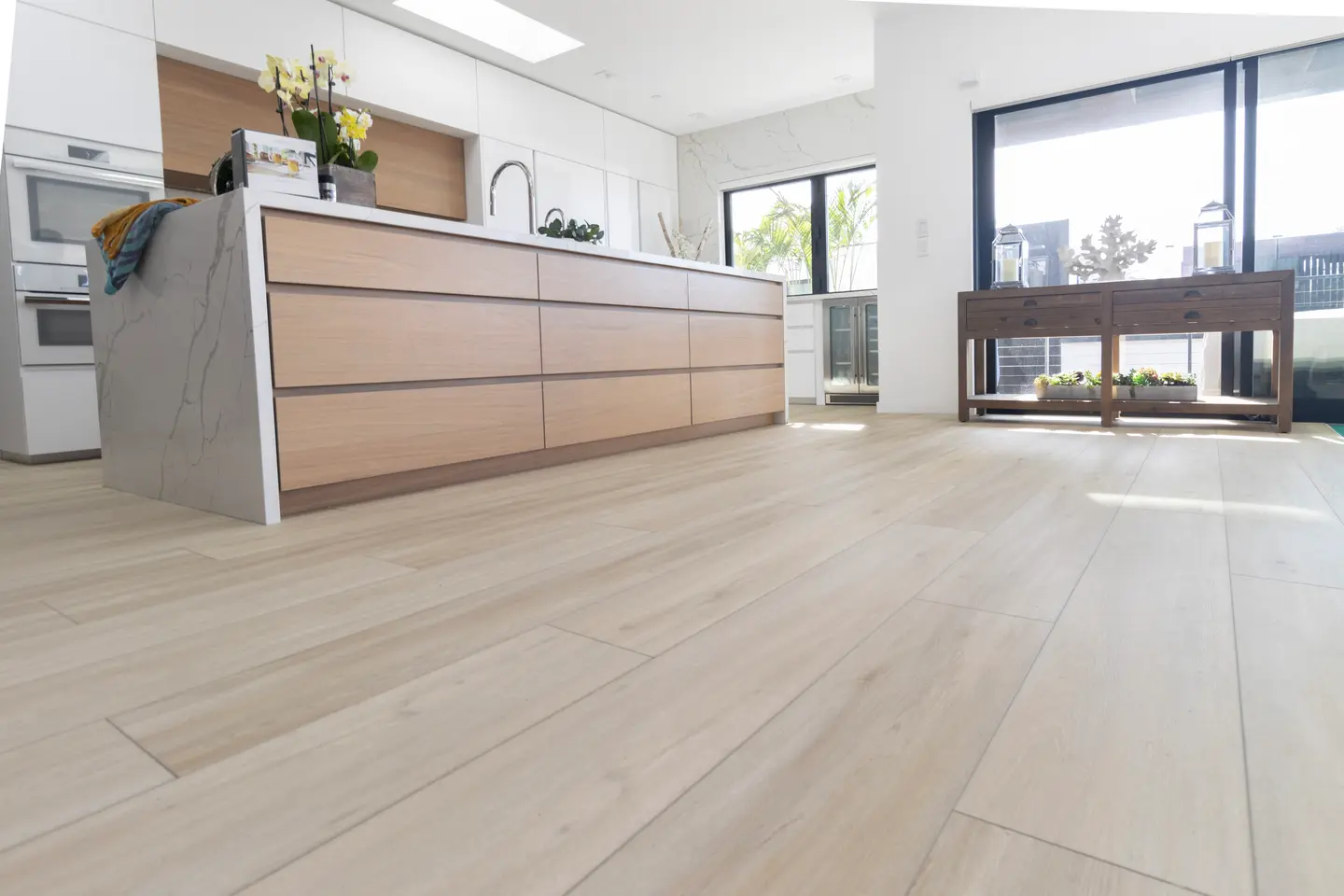
This is the most important rule in this entire guide, and it's the one big-box stores rarely make clear: if your luxury vinyl plank already has an attached pad, do NOT install a separate underlayment beneath it. Doing so creates a "double cushion" effect — far too much give. With every step, the rigid plank flexes on a spongy base, and that repeated micro-movement works the click-lock tongues until they crack, separate, or peak at the seams.
There are two other clear "skip it" scenarios:
- Glue-down LVP: Full-spread glue-down installations bond the plank directly to the subfloor. There is no floating layer, so underlayment serves no purpose — and would prevent proper adhesive contact. Glue-down floors need a clean, flat, primed subfloor only.
- Manufacturer prohibits it: Many warranties explicitly state that adding underlayment under attached-pad products voids coverage. Always read the installation guide before buying a pad you may not be allowed to use.
The takeaway: more cushion is not a luxury upgrade. For LVP, the wrong cushion is a structural liability. When in doubt, less is more — or none at all.
Moisture Barriers for Florida Concrete Slabs
Here is where Orlando installs diverge sharply from advice written for northern climates. Florida concrete slabs — whether on-grade or below-grade — continuously release water vapor, and that vapor has to go somewhere. Trap it under a floor with no escape and you get adhesive failure on glue-down jobs, cupping, and mold growth in the dark, warm space beneath your planks. This is not a rare edge case; it's the default condition in Central Florida.
For nearly any LVP installed over a concrete slab, you need a 6-mil polyethylene vapor barrier — either as a standalone sheet or built into an underlayment with an integrated film. Even planks with an attached pad usually require this separate vapor layer over concrete (the attached pad provides cushion, not vapor protection). Before installation, a professional should run a calcium chloride test or in-slab relative humidity (RH) probe to confirm the slab is within the manufacturer's moisture limits.
Why This Matters More in Orlando
Our subtropical humidity means slab moisture readings that would be harmless up north routinely exceed LVP tolerances here. We see homeowners blame the flooring when the real culprit was a missing vapor barrier over a high-moisture slab. If you're weighing materials for a damp-prone space, our guide to the best flooring for Florida humidity explains how climate should drive the entire decision — and the difference between LVP and LVT matters here too, since core construction affects moisture behavior.
Choosing the Right Type: Foam vs. Cork vs. Rubber
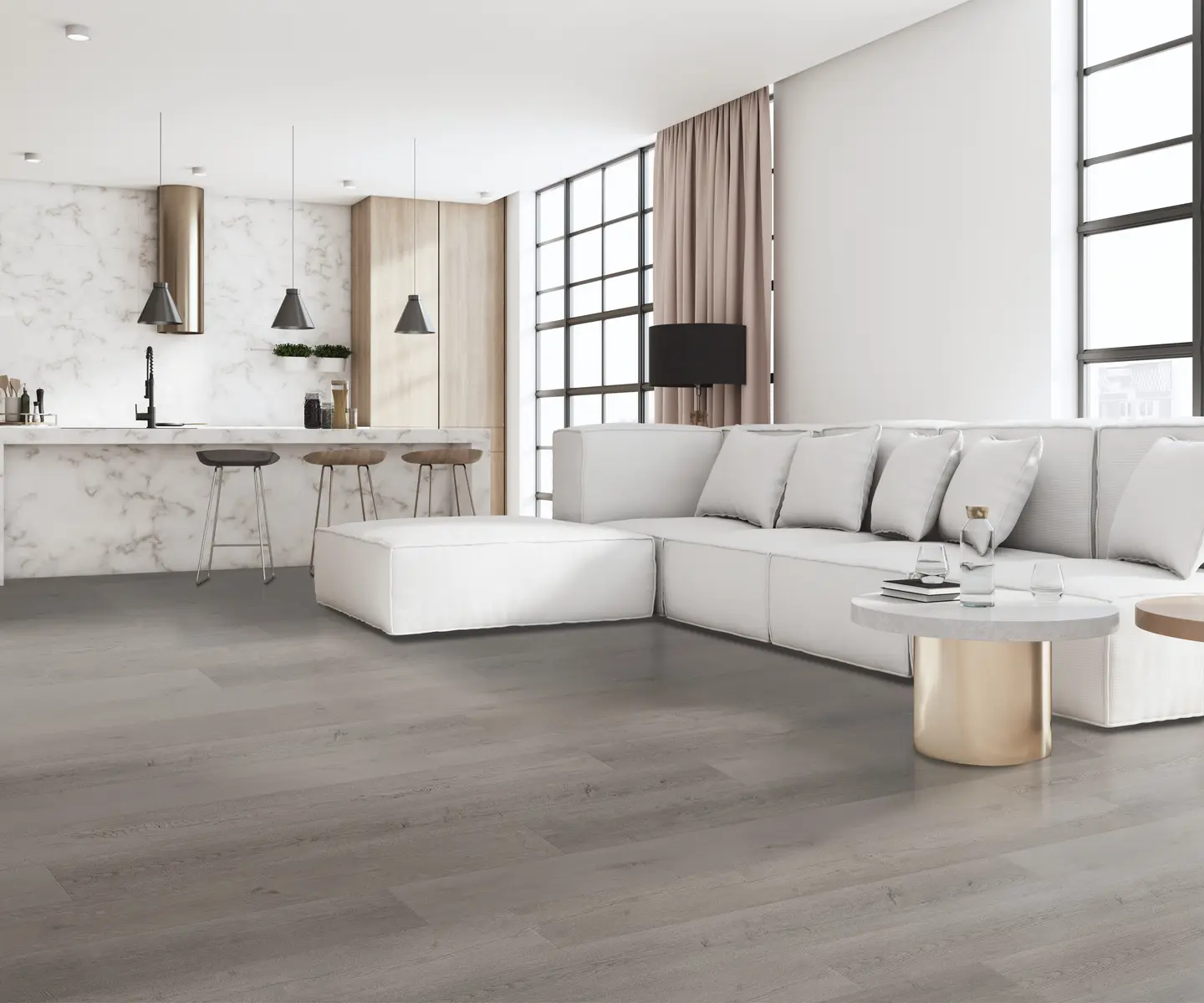
Once you've confirmed you actually need underlayment, the material choice comes down to budget, acoustics, and whether you're over concrete. Each type has a clear best-use case, and competitors rarely lay out the tradeoffs side by side.
The Three Main Options
- Foam (budget): Lightweight polyethylene foam is the most affordable choice for basic floating installs without an attached pad. It offers modest sound dampening and basic comfort. Many versions include an integrated vapor film for concrete. Best for straightforward, ground-floor rooms on a budget.
- Cork (best acoustic + eco): Cork is naturally sound-absorbing, dimensionally stable, and made from a renewable resource. It excels at reducing impact noise, making it ideal for upper floors, condos, and home theaters. It typically needs a separate vapor barrier over concrete since cork itself breathes.
- Rubber (premium acoustic + durability): Recycled rubber delivers the best sound deadening and longevity at the highest price point. It's the go-to for serious noise reduction in multi-story and shared-wall situations where IIC/STC numbers are non-negotiable.
Understanding IIC and STC Ratings
Two acoustic numbers matter for LVP, especially in condos and second-story rooms: IIC (Impact Insulation Class) measures how well the floor blocks impact noise like footsteps, while STC (Sound Transmission Class) measures airborne noise like voices and TV. Higher is better, and many HOAs and condo associations require a minimum IIC of 50 or more for upper units. The right acoustic underlayment is often the only way to hit those thresholds — and proving compliance can be a closing requirement. Some underlayments also add a small R-value for warmth, though over radiant heat you must confirm both the pad and the LVP are rated for it, since too much insulation blocks heat transfer.
If you're still deciding between materials altogether, our breakdown of vinyl installation cost shows how underlayment and prep factor into the total project price.
The Cavalieri Approach to LVP Underlayment in Orlando
At Cavalieri Flooring, the underlayment conversation starts before we ever open a box. Our installation team evaluates your subfloor type, tests slab moisture where concrete is involved, and reads the specific manufacturer's warranty for your chosen product. That diagnostic step is exactly what prevents the double-cushion failures and missing-vapor-barrier callbacks that plague DIY and discount installs.
We match the underlayment strategy to the plank — skipping it entirely on attached-pad and glue-down floors, specifying a thin dense pad for bare floating planks, and always adding a proper vapor barrier over Florida slabs. If you want acoustic performance for a condo or second story, we'll spec cork or rubber to meet your IIC/STC target. Every install is backed by our workmanship guarantee, and we'd rather talk you out of an unnecessary pad than sell you one that voids your coverage. Explore our full luxury vinyl plank selection or learn more about our professional vinyl installation services.
Visit our showroom at 4301 36th St #101, Orlando, FL 32811, call (321) 424-0546, or request a free estimate online. Open Monday–Friday, 7:00 AM–5:00 PM & Saturday, 9:00 AM–3:00 PM.
Frequently Asked Questions
Does luxury vinyl plank need underlayment?
It depends on the product and the installation method. Glue-down LVP needs no underlayment at all. Floating LVP that already has an attached pad should not have additional underlayment beneath it. Only floating LVP without an attached pad benefits from a thin (1–1.5mm) underlayment. Over a concrete slab, you almost always need a moisture/vapor barrier regardless of the plank type.
Can I add underlayment under vinyl plank that already has an attached pad?
No. Stacking a separate underlayment beneath planks that already have an attached pad creates too much cushion. The excess deflection flexes the rigid locking joints with every step, which can crack the click-lock tongues, cause planks to separate, and void the manufacturer's warranty. If your LVP has an attached pad, install it directly on a clean, flat subfloor — adding a moisture barrier only if required over concrete.
Do I need a moisture barrier for vinyl plank over a concrete slab in Florida?
Yes. Florida concrete slabs release significant water vapor, and most LVP manufacturers require a 6-mil polyethylene vapor barrier (or an underlayment with an integrated film) over any below-grade or on-grade concrete. Skipping it can lead to trapped moisture, adhesive failure on glue-down jobs, and mold beneath the floor. A calcium chloride or RH probe moisture test confirms the slab is within spec before installation.
What do IIC and STC ratings mean for vinyl flooring?
IIC (Impact Insulation Class) measures how well a floor blocks impact noise like footsteps, while STC (Sound Transmission Class) measures airborne noise like voices and TV. Higher numbers are better. Many condos and HOAs require a minimum IIC of 50 or higher for upper-floor units. The right acoustic underlayment raises both ratings, which matters for second-story rooms, condos, and shared walls.
Which underlayment is best for luxury vinyl plank — foam, cork, or rubber?
Foam is the budget option and works for basic floating installs without an attached pad. Cork offers excellent acoustic performance and is eco-friendly, making it ideal for upper floors and condos. Rubber delivers premium sound deadening and durability at a higher cost. Choose based on your noise goals, whether the subfloor is concrete, and whether your planks already include an attached pad.
How flat does the subfloor need to be for vinyl plank underlayment?
Most manufacturers require the subfloor to be flat within 3/16 inch over a 10-foot span. Underlayment is not a leveling product — thin pads cannot bridge dips or humps. Low spots must be filled and high spots ground down before installation. On rigid SPC core planks, an uneven subfloor leads to hollow spots, clicking sounds, and stressed joints over time.
Does vinyl plank underlayment add warmth or R-value?
Some underlayments add a modest R-value that makes floors feel warmer and softer underfoot, which is a nice comfort upgrade in tiled-feeling spaces. However, if you plan to install over radiant heat, you must verify the underlayment and the LVP are both rated for it — too much insulation blocks heat transfer. In most Orlando homes warmth is a minor factor compared to moisture control and sound.
Get the Right Underlayment Spec for Your Orlando LVP
Get a free estimate for luxury vinyl plank installation from Cavalieri Flooring. We test your subfloor and specify the right underlayment and moisture barrier across Central Florida.
Or call us now: (321) 424-0546
Related Articles & Resources
Don't Let the Wrong Underlayment Sink Your New Floor
The thin layer beneath your LVP can make it quiet and stable for decades — or void the warranty before the first year is out. The rules are simple once you know them: skip it under attached-pad and glue-down floors, use a thin dense pad under bare floating planks, and always protect against moisture over a Florida slab.
At Cavalieri Flooring in Orlando, we test your subfloor, read your product's warranty, and spec the exact underlayment and vapor barrier your install needs — no guesswork, no callbacks.
Schedule Free Vinyl Consultation