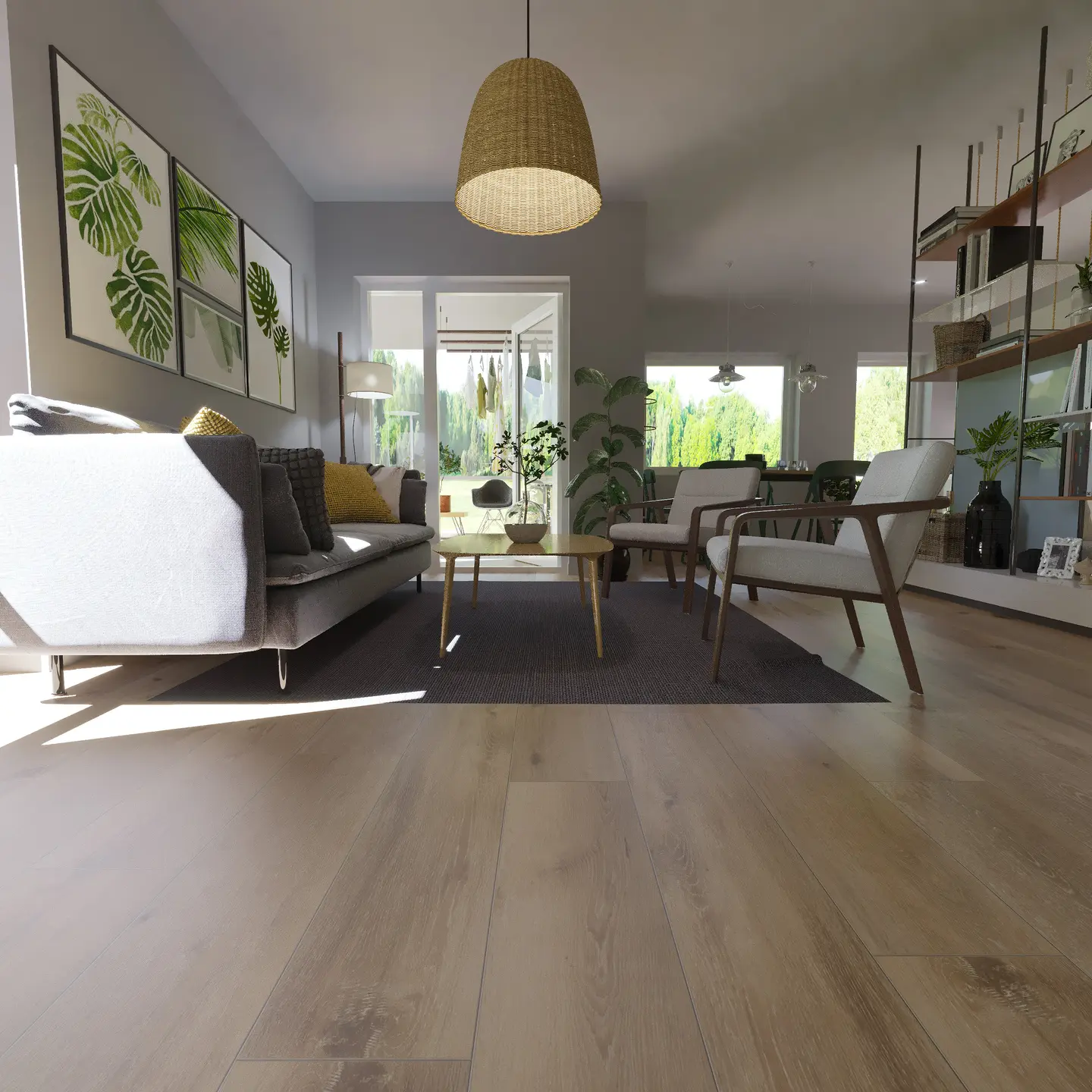
Selecting the right vinyl flooring for your home involves more than just picking a style you like. Different rooms have unique requirements for durability, moisture resistance, comfort, and aesthetics. This comprehensive guide will help you choose the perfect vinyl flooring for each space in your home.
💡 Key Takeaway
Vinyl flooring is the most versatile option for homes — 100% waterproof, scratch-resistant, and available in realistic wood and stone looks.
Room-by-Room Vinyl Flooring Guide
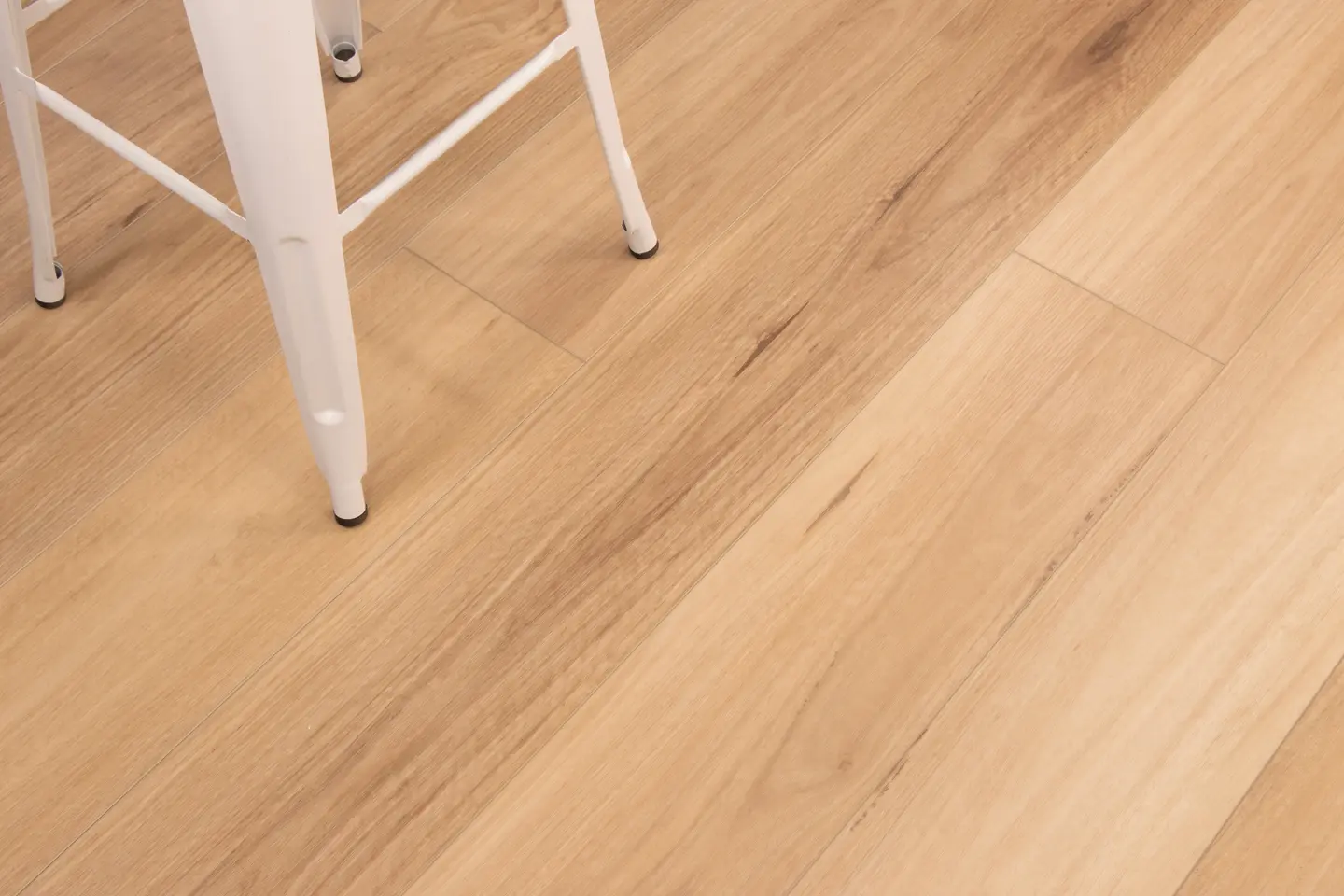
Kitchen - High Performance Required
Challenges: Spills, splashes, heavy foot traffic, temperature changes, dropped objects
Recommended Vinyl Type:
- Rigid core LVP or LVT with 20+ mil wear layer
- 100% waterproof construction
- Textured surface for slip resistance
- Example: Cavalieri Legends Collection
Style Considerations:
- Medium to dark colors hide scratches and dirt
- Wood looks for warmth, stone looks for contemporary feel
- Consider larger format tiles for fewer grout lines
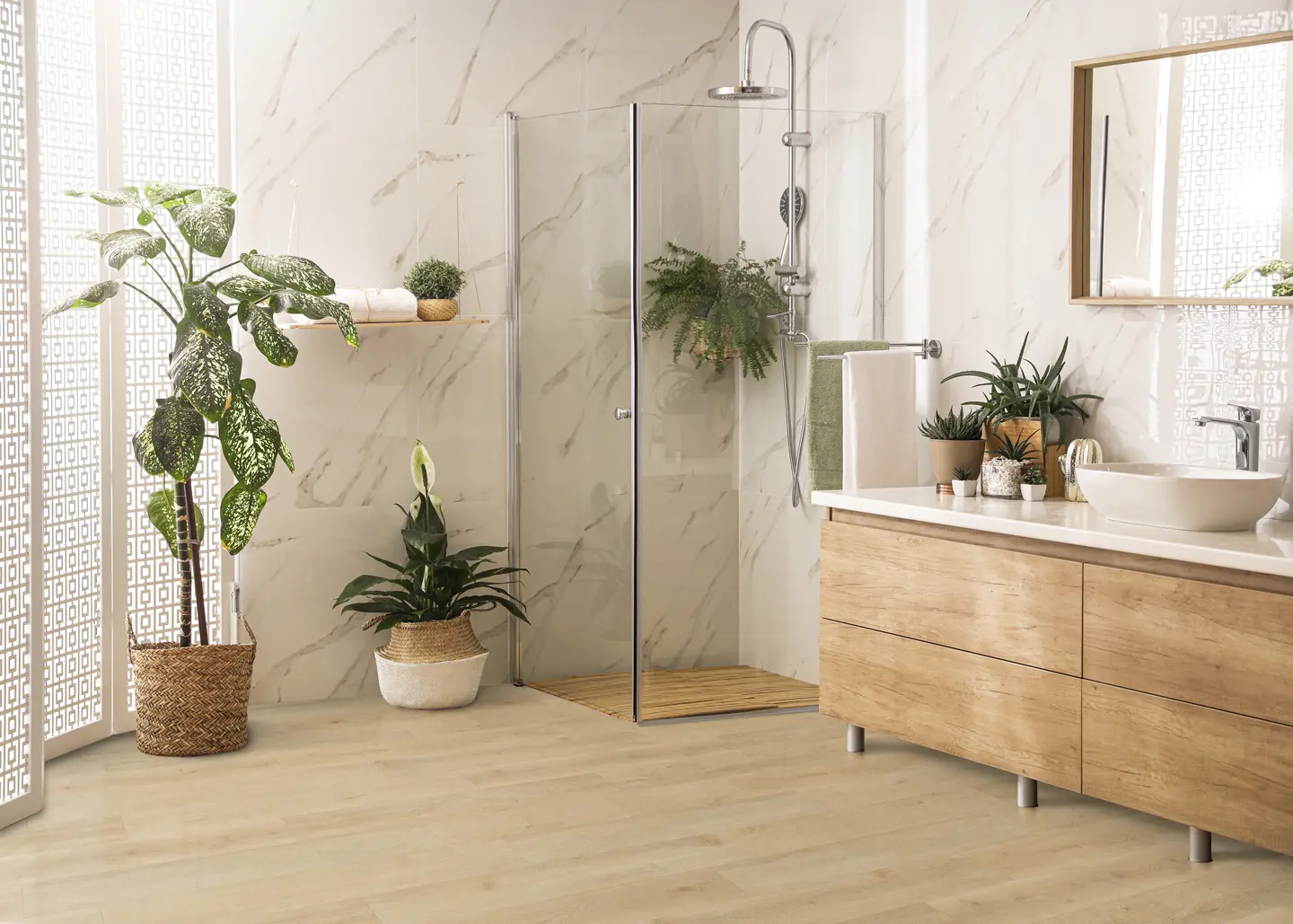
Bathroom - Moisture is Key
Challenges: High humidity, standing water, temperature fluctuations, moisture exposure
Recommended Vinyl Type:
- LVT with sealed edges and waterproof core
- Stone or tile appearance for authenticity
- Slip-resistant surface texture
- Example: Stone-look LVT from our collections
Style Considerations:
- Light colors make small bathrooms feel larger
- Stone and marble looks are popular choices
- Consider borders or accent patterns
Living Room - Comfort and Style
Challenges: Heavy furniture, entertaining, pet traffic, style showcase
Recommended Vinyl Type:
- WPC rigid core for comfort underfoot
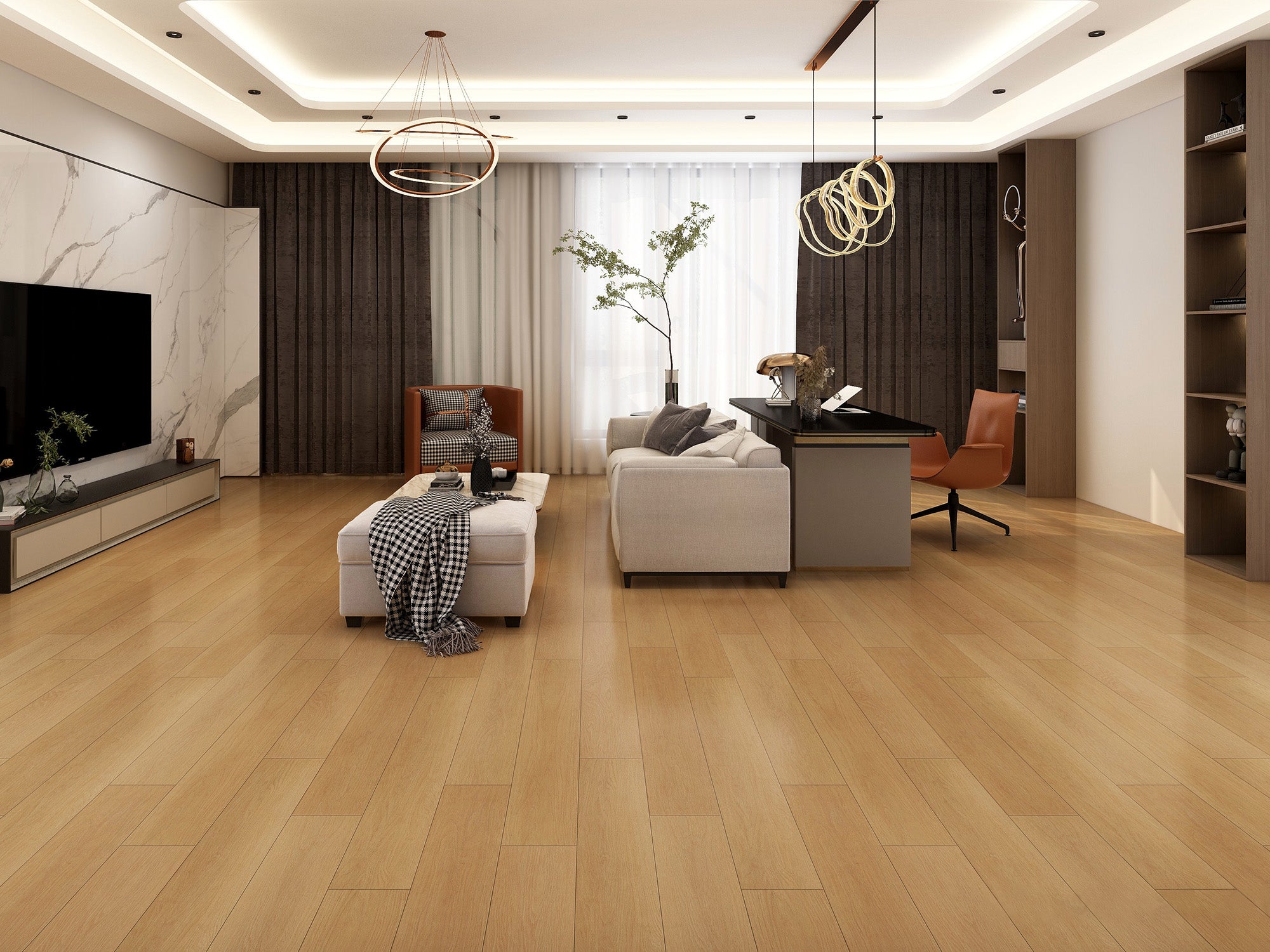
- Wide plank LVP for sophisticated look
- 12-20 mil wear layer sufficient for most families
- Example: Cavalieri Longboards Collection
Style Considerations:
- Wide planks create spacious feeling
- Consider your furniture and décor style
- Neutral tones offer versatility
Bedroom - Comfort Priority
Challenges: Comfort for bare feet, quiet walking, temperature comfort
Recommended Vinyl Type:
- WPC core for warmth and cushioning
- Standard wear layer (12 mil) adequate
- Click-lock installation for easy replacement
- Example: Cavalieri Select Collection
Style Considerations:
- Warmer wood tones create cozy atmosphere
- Consider bedroom size when choosing plank width
- Smooth textures for bare-foot comfort
Basement - Moisture and Durability
Challenges: Potential moisture, temperature changes, concrete subfloors
Recommended Vinyl Type:
- 100% waterproof rigid core construction
- Good insulation properties
- Can install directly over concrete (with proper prep)
- Higher wear layer for recreation room use
Style Considerations:
- Lighter colors brighten lower-light spaces
- Consider the basement's intended use
- Durable finishes for activity areas
Entryway/Mudroom - Maximum Durability
Challenges: Extreme traffic, dirt and debris, wet conditions, temperature changes
Recommended Vinyl Type:
- Commercial-grade wear layer (28+ mil)
- Rigid core for stability
- Textured surface for traction
- Easy-to-clean surface
Style Considerations:
- Darker colors and patterns hide dirt
- Stone or tile looks handle abuse well
- Consider transition strips to other flooring
Lifestyle Considerations
Families with Young Children
Priorities: Safety, comfort, easy cleaning, durability
- WPC core for softer surface
- Slip-resistant textures
- Stain-resistant surface
- Rounded edge profiles to prevent injury
Pet Owners
Priorities: Scratch resistance, easy cleanup, odor resistance
- Higher wear layer thickness (20+ mil)
- Rigid core construction
- Textured surfaces for traction
- Sealed edges to prevent moisture penetration
Elderly or Mobility-Impaired
Priorities: Slip resistance, comfort, easy maintenance
- Textured surfaces for grip
- WPC core for cushioning
- Smooth transitions between rooms
- Light colors for better visibility
Busy Professionals
Priorities: Low maintenance, durability, style
- High-quality wear layers
- Easy-to-clean surfaces
- Timeless styles that won't date quickly
- Professional installation for convenience
Budget Planning Guide
Budget-Conscious ($3-5 per sq ft installed)
- Cavalieri Select Collection
- Standard wear layer (12 mil)
- DIY installation to save costs
- Focus on high-traffic areas first
Mid-Range ($5-8 per sq ft installed)
- Cavalieri Laguna Collection
- Enhanced wear layer (20 mil)
- Mix of DIY and professional installation
- Better core construction
Premium ($8-12 per sq ft installed)
- Cavalieri Legends or Longboards Collection
- Maximum wear layer (28+ mil)
- Professional installation throughout
- Premium features and warranties
Climate Considerations
Hot, Humid Climates
- 100% waterproof construction essential
- Rigid core for dimensional stability
- Proper acclimation before installation
- Consider expansion gaps
Cold Climates
- WPC core for insulation properties
- Radiant heating compatibility if desired
- Proper temperature acclimation
- Warmer color choices
Dry Climates
- Monitor humidity levels
- Either core type works well
- Static control features beneficial
- Regular maintenance important
Making Your Final Decision
Questions to Ask Yourself:
- What is the primary use of each room?
- What is your maintenance preference?
- What is your total budget for the project?
- Do you have pets or small children?
- What is your style preference?
- Will you install yourself or hire professionals?
Our Recommendation Process:
- Assess your needs for each room individually
- Determine your budget and priorities
- Consider your lifestyle and long-term plans
- Visit our showroom to see and feel options
- Consult with our experts for personalized advice
Vinyl Flooring Buying Checklist
Once you have a sense of which rooms you are flooring, it helps to evaluate every product against the same set of criteria. Vinyl flooring is sold under dozens of brand names with confusing marketing language, so a simple checklist keeps you focused on the specifications that actually determine how a floor performs and how long it lasts. Run each contender through the points below before you commit to a full house worth of material.
Wear layer thickness is the single most important number on the spec sheet. The wear layer is the clear protective top coat that resists scratches, scuffs, and stains, and it is measured in mils. A 6 to 8 mil wear layer suits light-traffic bedrooms, 12 mil handles most family living spaces, 20 mil is ideal for kitchens and homes with pets, and 28 mil delivers commercial-grade toughness for entryways and busy households. Spending a little more on a thicker wear layer is the easiest way to add years of life to your floor.
Core construction determines stability and comfort. Rigid SPC (stone plastic composite) cores are dense, dimensionally stable, and the best choice for areas with temperature swings or uneven subfloors. WPC (wood plastic composite) cores are slightly softer and warmer underfoot, which many homeowners prefer in bedrooms and living rooms. Both are fully waterproof, so the choice comes down to feel and the condition of your subfloor.
Finish, texture, and warranty round out the list. Look for embossed or registered-emboss textures that align the grain pattern with the visual for a convincingly realistic look, a matte or low-sheen finish that hides footprints, and a clearly written residential warranty of 15 years or more. Finally, match the product to your budget on an installed-cost basis rather than material price alone, since labor, transitions, and subfloor prep all factor into the real total. When you are ready to compare specific products, you can browse our full vinyl flooring collection and weigh each option against this checklist.
Vinyl Flooring and Florida's Climate

Choosing vinyl in Central Florida is a different exercise than choosing it in a dry, temperate state. Orlando homes contend with months of high humidity, intense summer heat, and frequent afternoon storms, and those conditions punish flooring that was not built for them. This is the main reason vinyl has become the default recommendation for so many local homeowners: a quality waterproof plank simply shrugs off the moisture and temperature swings that cause other materials to cup, swell, or peel.
Humidity is the first concern. Indoor relative humidity in Florida can climb well above the comfortable range whenever the air conditioning is off, and porous floors like solid hardwood react by absorbing moisture and expanding. Waterproof vinyl does not absorb water, so it stays dimensionally stable through wet season after wet season. That same trait makes it forgiving of spills, wet shoes, pet accidents, and the occasional plumbing leak that would ruin a moisture-sensitive floor.
The bigger, less obvious issue is the subfloor. The majority of Orlando homes are built on concrete slab-on-grade foundations, and those slabs continuously wick ground moisture upward through a process called vapor emission. Even though the vinyl on top is waterproof, trapped slab moisture can compromise adhesives and create the conditions for mildew underneath if the slab is not tested and prepped first. A moisture test, proper sealing, and flatness correction during subfloor preparation are non-negotiable steps in our climate. Heat and UV exposure matter too: pick floors with strong UV-stable finishes for sun-drenched rooms, and acclimate the planks on site before installation so they settle to your home's true conditions. Handled correctly, vinyl is arguably the best-suited flooring for the Florida lifestyle.
Maintaining Your Vinyl Floors
One of the biggest selling points of vinyl flooring is how little upkeep it demands, but a simple, consistent routine still makes the difference between a floor that looks new for two decades and one that dulls prematurely. The good news is that vinyl care requires no waxing, refinishing, or specialty equipment, just regular attention and a few protective habits.
For day-to-day care, sweep, dust mop, or vacuum (using a hard-floor setting without a beater bar) to remove the grit and sand that act like sandpaper underfoot. When it is time to wash, damp mop with a pH-neutral floor cleaner; avoid soaking the floor, and steer clear of wax, oil soaps, abrasive pads, and steam mops, all of which can damage the wear layer or seams over time. Wipe up spills promptly even though the floor is waterproof, since standing water can still creep toward edges and transitions.
Prevention protects your investment. Place walk-off mats at exterior doors to capture grit, use felt pads under furniture legs, and lift rather than drag heavy items across the planks. Use only mats with non-staining, vinyl-safe backings, because some rubber-backed rugs can discolor the surface. Keep your home's humidity and temperature reasonably steady so the planks stay dimensionally calm, and follow the manufacturer's care guidelines to preserve your warranty. With this light routine, your vinyl will look its best for many years, and our team is always available for a free estimate if you ever decide to expand the floor into additional rooms.
Frequently Asked Questions
How do I pick the right vinyl flooring for my home?
Start with how each room is used, then match the product to that demand. Choose a higher wear layer and rigid core for kitchens, entryways, and pet areas, and a comfortable WPC core for bedrooms. Confirm the floor is waterproof, fits your budget on an installed basis, and suits your style, then compare options against a simple checklist of wear layer, core, finish, and warranty.
What thickness of vinyl flooring should I choose?
Pay attention to two numbers: overall plank thickness and wear layer thickness. Look for an overall thickness of at least 5mm for a stable, quiet floor, and prioritize the wear layer, where 12 mil works for living areas, 20 mil is best for kitchens and homes with pets, and 28 mil suits high-traffic entries. The wear layer matters more for durability than the total thickness.
Is vinyl flooring good for the whole house?
Yes. Modern luxury vinyl is one of the few materials that performs well in every room, from waterproof bathrooms and kitchens to comfortable bedrooms and living spaces. Running the same floor throughout the home also creates a seamless, open look and simplifies maintenance, which is why whole-house vinyl is so popular in Florida.
How long does vinyl flooring last?
Quality luxury vinyl with a 20-mil or thicker wear layer typically lasts 20 to 25 years in a residential setting, often backed by lengthy manufacturer warranties. Budget vinyl with a thin wear layer may only last 5 to 10 years, so investing in a thicker wear layer and professional installation pays off over the life of the floor.
Is professional vinyl flooring installation worth it?
For most homeowners, yes. Professional installation ensures the subfloor is properly tested, leveled, and prepped, which is especially important on Florida slab foundations, and it protects your warranty. Pros also handle transitions, stairs, and pattern layout cleanly. Learn more about our vinyl flooring installation services or see how vinyl stacks up in our vinyl vs laminate comparison.
Need Help Choosing the Right Floor?
Our flooring experts are ready to help you find the perfect match for your space.
Or call us now: (321) 424-0546
Recommended Products
Related Articles & Resources
Ready to find your perfect vinyl flooring?
Schedule a consultation with Cavalieri Flooring's experts. We'll help you select the ideal vinyl flooring for each room in your home based on your specific needs and preferences.
Start Your Selection