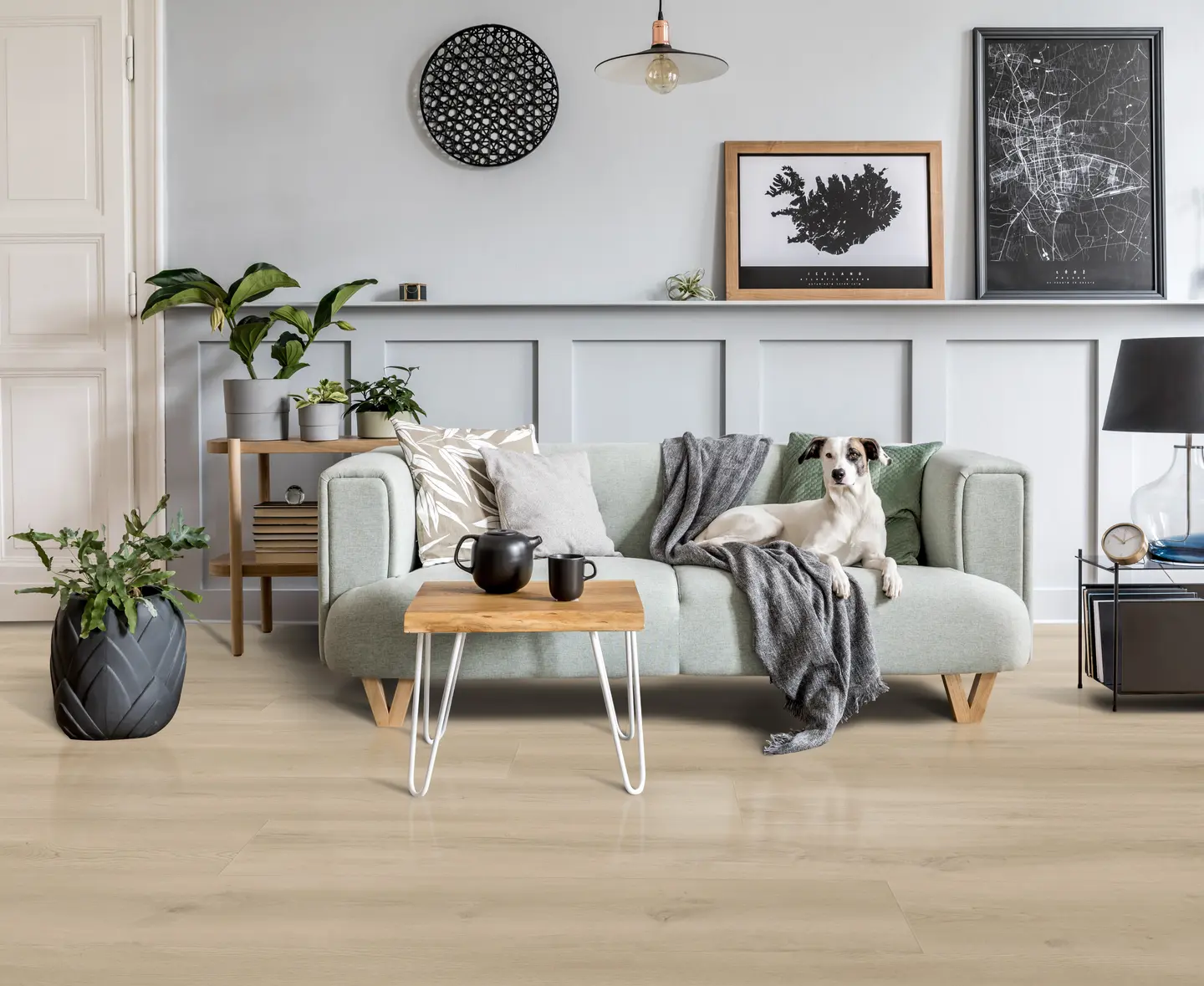
Why do so many beautiful luxury vinyl plank floors stop dead at the bottom step? Because stairs are the single hardest part of any flooring project — and the part where DIY shortcuts fail fastest. Luxury vinyl plank stair installation follows a completely different set of rules than the open floor it connects to, and ignoring those rules leads to lifting noses, bouncing treads, and a genuine safety hazard on the highest-fall-risk surface in your home. If you've ever stood at the top of a half-finished staircase wondering why the planks won't stay put, you're not alone.
This guide breaks down exactly how Orlando's professional installers build durable, slip-safe vinyl stairs that look like a seamless extension of your floor. You'll learn why stairs must be full glue-down instead of floating, which rigid-core LVP to use, how to choose between overlap and flush stair nosing, how to measure and cut each step, and what the job really costs. Whether you plan to hire a pro or simply want to understand the work, you'll finish this article knowing what a flawless vinyl staircase requires.
★ Key Takeaways
- Stairs must be full-spread glue-down — never floating click-lock. This is the #1 mistake that ruins vinyl stairs.
- Use rigid SPC stone-core plank for stairs; flexible WPC cores deform over the tread nose.
- Match your stair nosing profile (overlap vs. flush) to how the tread meets the riser and the plank thickness.
- Measure every step individually — stairs are rarely identical, and LVP stairs cost about $50–$120 per step installed.
Why LVP Works on Stairs (When It's Done Right)
Luxury vinyl plank has become the go-to stair surface in Orlando homes for good reason. It's 100% waterproof, highly scratch resistant, warm underfoot, and — when it matches the floor below — it makes a staircase look custom-built. Because luxury vinyl plank stair installation lets you carry the exact same color and grain from your living area up the stairs, you eliminate the awkward visual break that carpet or mismatched wood treads create.
There's also a strong value argument. LVP stairs typically cost 50–70% less than comparable solid hardwood stairs while resisting the moisture, humidity swings, and dropped-spill accidents that plague real wood in Florida. If you're already installing vinyl across your main floor, extending it to the stairs is one of the highest-impact, best-value upgrades you can make. Browse the full lineup of luxury vinyl plank options to find a color that flows from floor to stair.
But here's the catch that separates a stunning staircase from a dangerous one: stairs are not floors. An open floor is a single connected field that's allowed to expand, contract, and float as one unit. A staircase is a series of small, fixed surfaces with vertical edges that take enormous concentrated foot pressure. The installation method has to change completely — and that's exactly where most failures begin.
Choosing the Right LVP — Rigid SPC Core Required
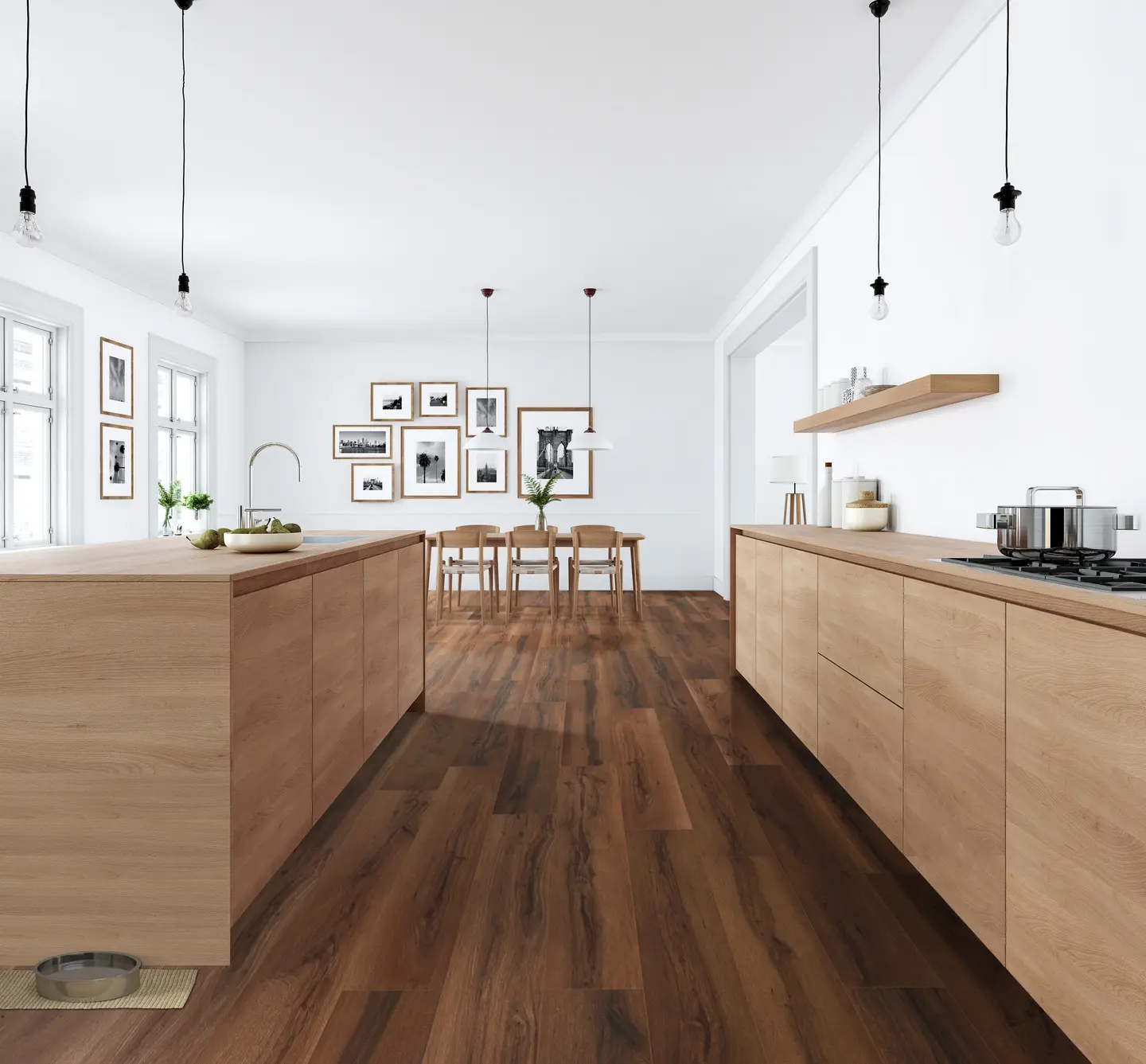
Not every vinyl plank belongs on a staircase. The single most important spec for stairs is the core type, and the answer is rigid SPC (stone polymer composite). SPC's dense, dimensionally stable core holds a crisp, clean edge when it's cut and wrapped over the nose of a tread — the most heavily used point on the entire stair.
Why Not Flexible WPC or Thin LVT?
Softer WPC (wood polymer composite) cores and thin flexible glue-down LVT are excellent on flat floors but a poor choice for stair noses. Over a tread edge, a flexible core can sag, deform, or "telegraph" the edge of the stringer underneath, and it wears through far faster at the nosing. For stairs, prioritize:
- Rigid SPC stone core — holds the cut edge and resists deflection underfoot
- A thick, durable wear layer (20 mil / 12+ mil minimum) — stairs concentrate traffic on a narrow band
- An embossed, textured surface — adds critical traction (more on slip resistance below)
- A matching coordinated stair nosing in the same color/collection — so the nose isn't a visible mismatch
One often-overlooked detail: buy a matching manufacturer stair nosing from the same collection rather than improvising one from a cut plank. Cavalieri stocks coordinated nosings for our vinyl collections — see the full range of vinyl flooring accessories to match your exact plank.
Stair Nosing Types: Overlap vs. Flush vs. Square/Bullnose
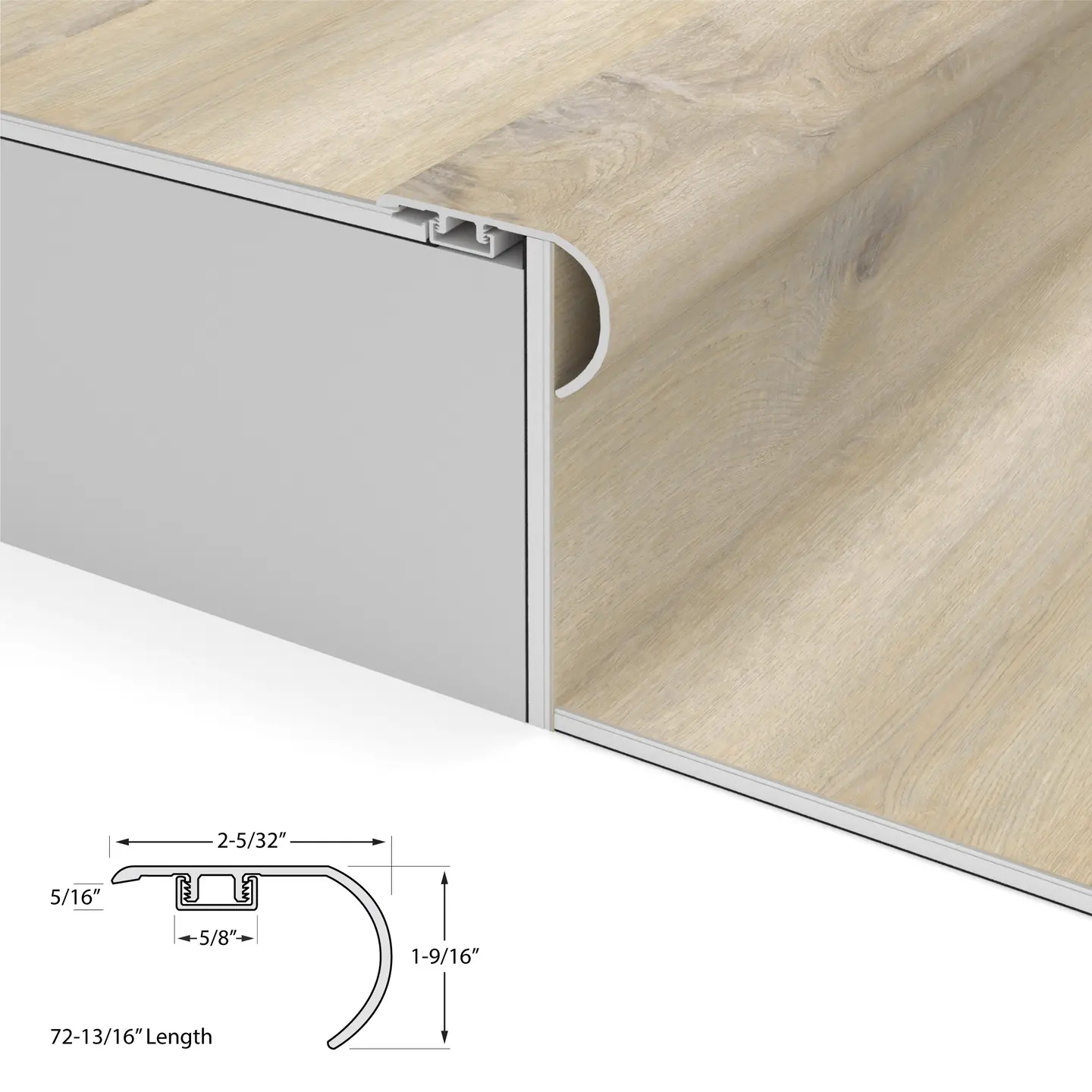
The stair nosing is the bullnose lip at the front edge of each tread. It protects the most vulnerable corner of the step, defines the visual edge for safety, and is the single most important accessory in any luxury vinyl plank stair installation. Choosing the wrong profile is one of the most common — and most visible — errors.
The Three Profiles Explained
- Overlap (overlapping) nosing: Has a lip that sits on top of the finished tread surface. It's forgiving of slight height variation and is the typical choice when the tread plank floats slightly or sits proud. Great for retrofits where tread heights vary step to step.
- Flush nosing: Designed for glue-down installs where the tread plank and the nosing sit at the same level for a seamless, built-in look. It produces the cleanest line but demands precise, level tread prep.
- Square edge / bullnose: A rounded or squared front profile used where a more traditional finished-wood look is desired, often paired with a glued tread cap. Bullnose softens the corner and is gentle on bare feet.
The rule that competitors skip: match the nosing profile to how the tread meets the riser and to the thickness of the plank you're installing. An overlap nosing on a perfectly flush glue-down tread leaves an ugly raised lip and a trip edge; a flush nosing over an uneven tread leaves gaps. Get this pairing right before you buy. For a deeper look at how coordinated treads transform a staircase, read our guide to coordinated stair treads.
Step-by-Step Stair Installation
This is the exact sequence our installers follow. Critically, every component is bonded with adhesive — nothing floats on a staircase.
Step 1 — Measure Every Step Individually
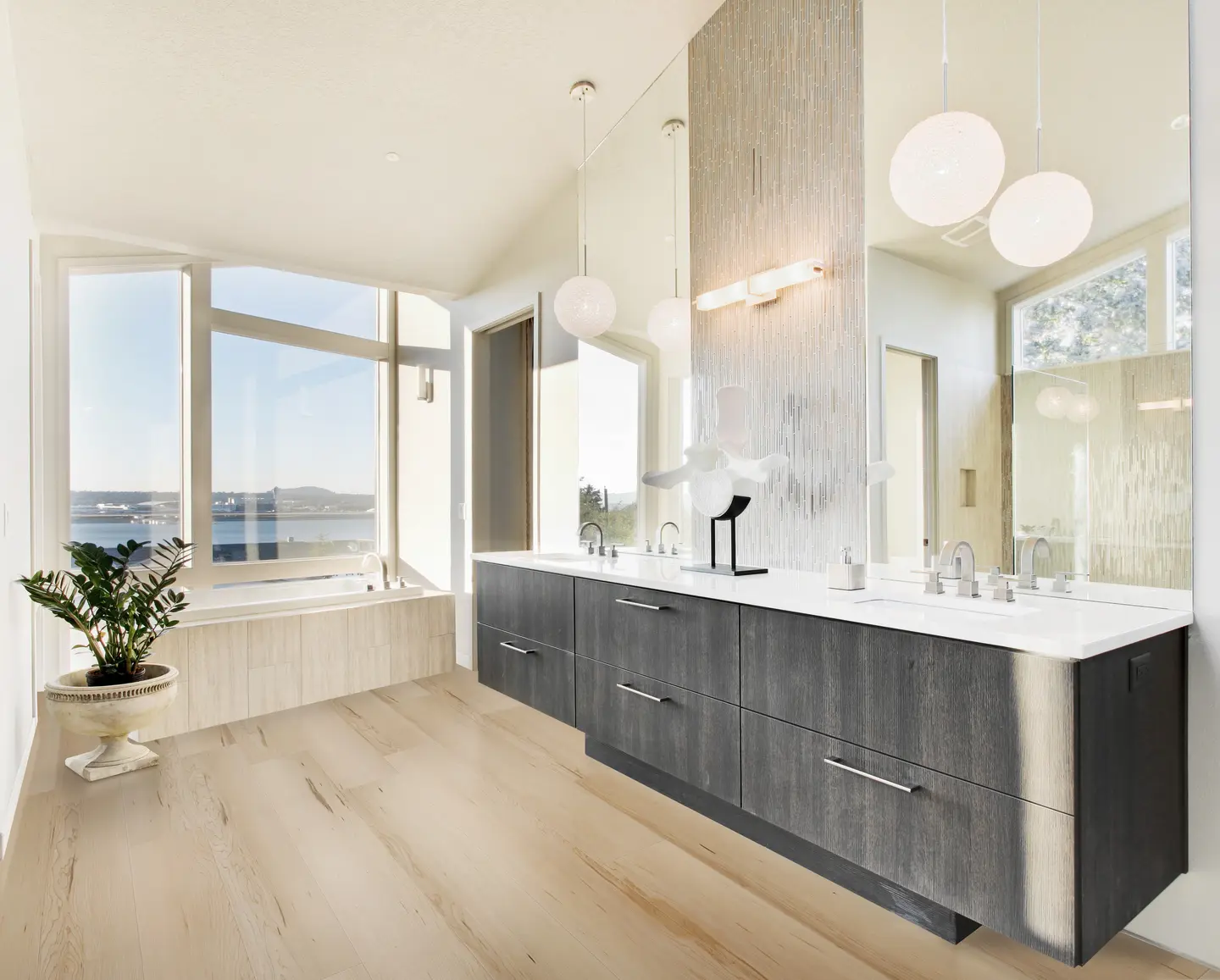
Stairs are rarely truly identical. Tread depths and riser heights can vary by a fraction of an inch from step to step — especially in older Orlando homes. Measure the depth and width of each tread and the height and width of each riser, label every piece, and cut to fit per step. Mass-cutting from one master measurement is a classic cause of gaps and overhangs.
Step 2 — Prep and Acclimate
Remove old carpet, tack strips, staples, and any adhesive. The bare stair surface (wood or properly leveled substrate) must be clean, dry, solid, and free of squeaks — screw down any loose treads now. Let the LVP acclimate flat in the space for at least 48 hours; in Florida, planks stored in a hot garage or delivery truck can run much warmer than the conditioned interior, and skipping acclimation invites dimensional change after bonding.
Step 3 — Install Risers First
Cut each riser piece to size and bond it to the vertical face of the step with construction adhesive, pressing firmly for full contact. Working risers-first means the tread can later overlap the top edge of the riser for a clean, finished joint.
Step 4 — Install the Stair Nosing
Set the matching nosing along the front edge of the tread. Bond it with construction adhesive and secure it with finish nails for mechanical hold while the adhesive cures. The nosing is the highest-stress component, so this dual hold (adhesive + finish nails) is non-negotiable.
Step 5 — Install the Tread
Cut the tread plank to the measured depth so it meets the back edge of the nosing and overlaps the top of the riser. Apply full-spread adhesive across the entire tread — not just dabs — and press the plank down completely for 100% bond coverage. Roll or weight it to eliminate air pockets.
Step 6 — Work Top-Down and Cure
Move from the top step downward so you never kneel on a freshly bonded tread. Wipe away any squeeze-out adhesive immediately, then keep traffic off the stairs while the adhesive cures per the manufacturer's instructions (often 24 hours). Curious how this compares to a flat-floor install? See our luxury vinyl flooring installation services.
Safety, Slip Resistance & Building Code
Stairs are the highest-fall-risk surface in any home, so safety isn't optional — it's the whole point of doing the job correctly. The reason floating installs are banned on stairs comes down to physics: a click-lock floor depends on a connected field that expands and contracts together. On a stair there's nowhere for that movement to go, so floating planks creep, lift at the nose, and become a trip hazard. Full glue-down is the only safe method.
Slip Resistance for Florida Homes
Traction matters most on stairs, and even more in Florida, where pools, patios, and humidity mean bare or wet feet are common. Choose planks with an embossed, textured wear layer and a higher slip-resistance (R) rating. In high-traffic or pool-adjacent homes, low-profile stair-tread grip strips add an extra margin of safety without ruining the look.
Code & Consistency
- Consistent riser height and tread depth across the run is both a code expectation and a fall-prevention essential — uneven steps cause stumbles.
- A defined nosing edge helps the eye read each step; a visible, well-formed bullnose improves safety.
- Secure, squeak-free attachment — every component bonded so nothing shifts underfoot.
- Handrails and lighting remain part of safe stair design and should never be compromised by a flooring change.
Because the margin for error is so small, stairs are the part of any project where professional installation pays for itself. For the full case, read why professional installation trumps DIY.
The Cavalieri Approach to Vinyl Stairs in Orlando
At Cavalieri Flooring, we treat stairs as the showpiece of a vinyl project, not an afterthought. Our installers measure every step individually, use rigid SPC plank and color-matched nosings, and bond every riser, tread, and nose with construction adhesive and finish nails — never floating, never improvised. The result is a staircase that matches your floor exactly and stays tight, quiet, and slip-safe for the long haul.
We stock coordinated stair nosings for our vinyl collections, so the nose of every tread matches the plank precisely instead of standing out as a mismatched strip. If you're starting from your floors and working up, browse our luxury vinyl plank collections and matching vinyl accessories, and we'll help you confirm the right core, wear layer, and nosing profile for your staircase.
Visit our showroom at 4301 36th St #101, Orlando, FL 32811, call (321) 424-0546, or request a free estimate online. Open Monday–Friday, 7:00 AM–5:00 PM & Saturday, 9:00 AM–3:00 PM.
Frequently Asked Questions
Can you install floating click-lock LVP on stairs?
No. Stairs must always be full-spread glue-down, never floating. A floating click-lock floor relies on the planks expanding and contracting as one connected field across an open floor. On stairs there is nowhere for that movement to go, so floating planks shift, lift at the nose, and create a serious trip hazard. Every tread, riser, and stair nosing must be permanently bonded with construction adhesive.
What type of vinyl plank is best for stairs?
Use rigid-core SPC (stone polymer composite) luxury vinyl plank for stairs. The dense, dimensionally stable core holds a clean edge when cut for the nose and resists flexing under foot traffic. Avoid flexible WPC or thin glue-down LVT for the nosing, because softer cores can deform over the tread edge and wear prematurely at the most-used point on the stair.
What is the difference between overlap and flush stair nosing?
Overlap (overlapping) nosing has a lip that sits on top of the finished tread, making it ideal for floating floors and slightly uneven tread heights. Flush nosing is designed for glue-down installations where the plank and nosing sit at the same level for a seamless look. On stairs, the nosing profile must match how the tread meets the riser and the thickness of the plank you are installing.
How do I measure stairs for vinyl plank?
Measure every single step individually. Stairs are rarely perfectly identical — tread depths and riser heights can vary by a fraction of an inch from step to step, especially in older Orlando homes. Measure the depth and width of each tread and the height and width of each riser, label each piece, and cut to fit per step rather than mass-cutting from one master measurement.
How much does it cost to install vinyl plank on stairs in Orlando?
Professional luxury vinyl plank stair installation typically runs about $50 to $120 per step installed, depending on the stair nosing profile, whether risers are wrapped, the condition of the existing stairs, and the complexity of the staircase (curves, landings, and open sides cost more). A standard straight 13-step staircase often falls in the $650 to $1,500 range including labor and materials.
Is luxury vinyl plank slippery on stairs?
Quality textured LVP offers good traction, but stairs deserve extra attention because they are the highest-fall-risk surface in the home. Choose planks with an embossed, textured wear layer and a higher slip-resistance (R) rating, and consider adding low-profile stair-tread grip strips in high-traffic or pool-adjacent Florida homes where bare or wet feet are common.
Do vinyl stairs need to acclimate before installation?
Yes. Let the planks acclimate flat in the installation space for at least 48 hours so the material reaches the home's normal temperature and humidity. This matters in Florida, where planks stored in a hot garage or delivery truck can be significantly warmer than the conditioned interior. Acclimation reduces the risk of dimensional change after the nosing is bonded in place.
How do LVP stairs compare in cost to hardwood stairs?
Luxury vinyl plank stairs generally cost 50 to 70 percent less than comparable solid hardwood stairs while delivering waterproof performance and excellent scratch resistance. For Orlando homeowners who want the warm wood look on their stairs without the price and moisture sensitivity of real wood, LVP that matches the adjoining floor is one of the best value upgrades available.
Planning Vinyl Plank Stairs in Orlando?
Get a free estimate for luxury vinyl plank stair installation from Cavalieri Flooring. We serve all Central Florida neighborhoods.
Or call us now: (321) 424-0546
Related Articles & Resources
- Stair Tread vs. Stair Nosing for LVP: Which One Do You Need?
- 5 Wins of Coordinated Stair Treads
- Why Professional Installation Trumps DIY
- Vinyl Installation Cost Guide
- LVP vs. LVT Explained
- Shop Luxury Vinyl Plank
- Shop Vinyl Stair Nosings & Accessories
- Vinyl Installation Services in Orlando
- Get a Free Flooring Estimate
Build Stairs That Match Your Floor — and Stay Safe Underfoot
Stairs are the hardest part of any flooring project and the easiest place to go wrong. Floating planks, the wrong core, and a mismatched nosing turn a beautiful upgrade into a daily hazard. Done right — full glue-down, rigid SPC, matched nosing measured step by step — your vinyl stairs become a seamless, slip-safe extension of your floor.
At Cavalieri Flooring in Orlando, our installation team builds warrantied vinyl staircases that match your floors exactly and pass the test of years of foot traffic.
Schedule Free Stair Installation Estimate