Are your floors taking a beating from the very pets you love? For most Orlando homeowners with dogs and cats, the constant cycle of claw scratches, muddy paws, and the occasional accident turns a beautiful floor into a source of daily stress. Choosing the right pet-friendly flooring means you no longer have to choose between a stylish home and a happy, active pet. The right surface shrugs off scratches, wipes clean after accidents, and gives your animals the traction they need to move safely.
This guide cuts through the marketing claims and ranks the real-world performance of every major flooring type for pet households. You'll learn exactly what to look for — wear-layer thickness, waterproof ratings, and surface traction — then see a side-by-side comparison of luxury vinyl, tile, laminate, and hardwood. By the end, you'll know precisely which floor will survive your dog's zoomies and your cat's claws for years to come.
★ Key Takeaways
- Luxury vinyl plank with a rigid SPC core and a 20-mil-plus wear layer is the #1 pet-friendly flooring — waterproof, scratch-resistant, and comfortable.
- The wear layer matters most: 6-mil is too thin for dogs; choose 20-mil or 28-mil for serious claw resistance.
- Avoid carpet (odor + stains), soft solid woods like pine, and any glossy floor that shows every scratch.
- Traction protects your pet: textured, matte surfaces prevent the slipping that strains older dogs' hips and joints.
What Matters for Pet Owners
Before you fall in love with a color, you need to evaluate flooring the way a pet owner should. The most beautiful plank in the showroom is the wrong choice if it dents under your Labrador or turns into a skating rink for your aging beagle. When we help Orlando families select pet-friendly flooring, we weigh five non-negotiable criteria — and almost every regret comes from ignoring one of them.
1. Scratch Resistance (and the Wear-Layer Truth)
Dog and cat claws are the number-one enemy of a floor's finish. On resilient floors like luxury vinyl, scratch resistance is determined by the wear layer — the clear top coating measured in mils (thousandths of an inch). A budget 6-mil wear layer is fine for a quiet condo but will show claw marks fast in a home with an active dog. A 20-mil layer is the residential pet-home sweet spot, and a 28-mil commercial-grade layer handles even big, energetic breeds. On hardwood, an aluminum-oxide factory finish provides the toughest scratch protection.
2. 100% Waterproof for Accidents
Even perfectly trained pets have accidents, and a puddle that sits on a porous floor for hours is a disaster. Waterproof, non-porous surfaces don't absorb urine, so they won't swell, stain, or trap odor. This is where natural wood and standard laminate fall behind, and where vinyl and tile pull ahead.
3. Traction for Paws
Hard, slick floors are genuinely uncomfortable — even dangerous — for dogs. Slipping forces a dog to splay its legs, which strains hips and joints, a real concern for large breeds and senior pets. A textured or embossed surface gives paws grip and confidence.
4. Easy Cleanup & Hygiene
Pet hair, dander, and muddy paws are a daily reality. A smooth, sealed surface that wipes clean in seconds beats anything that traps fur and allergens in fibers or grout lines. For homes with allergy sufferers too, this overlaps with our guide to the best flooring for allergy sufferers.
5. Comfort & Warmth
Your pet spends a lot of time lying on the floor. A surface with a little give and warmth — or one that pairs well with washable mats — keeps animals comfortable, especially older pets with sore joints.
Top Pet-Friendly Flooring Options
Here's how the major flooring categories rank for real pet households, from best to most situational.
#1 — Luxury Vinyl Plank (Rigid SPC Core)
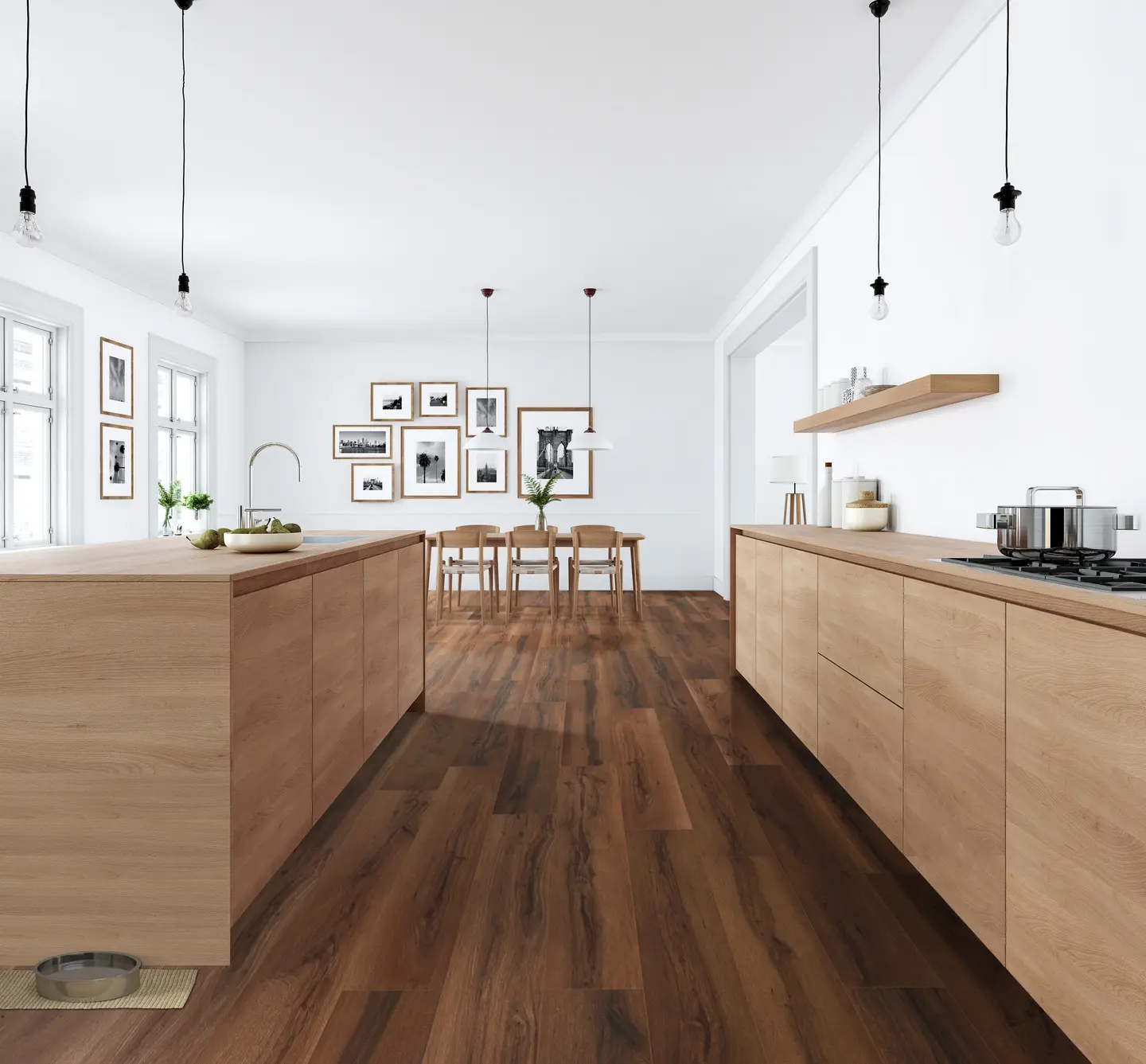
Luxury vinyl plank (LVP) with a rigid SPC (stone-polymer composite) core is, by a wide margin, the best all-around floor for pets. It checks every box: it is 100% waterproof, so accidents wipe up with zero absorption; it comes with thick 20-mil and 28-mil wear layers that fend off claws; and it is sold in realistic embossed textures that grip paws. It's also warmer and softer underfoot than tile and dramatically easier to clean than carpet. As a bonus, LVP typically costs 50–70% less than hardwood, so a few stray scratches over the years won't break your heart. Browse our full range of luxury vinyl plank options to see textures and wear layers side by side.
#2 — Porcelain Tile
Porcelain tile is virtually indestructible. It is scratch-proof, completely waterproof, and the easiest surface to sanitize after accidents — which is why it's a favorite for mudrooms and laundry areas. The trade-offs are comfort and traction: tile is cold and hard, which is tough on senior or large-breed dogs, and polished finishes can be slippery. Choose a matte or textured porcelain and add washable area rugs in your pet's favorite spots.
#3 — Waterproof Laminate
Modern waterproof laminate has come a long way and offers an extremely hard, scratch-resistant wear surface at a friendly price. Its main vulnerability is the seams: if a heavy-coverage accident sits long enough to seep into a joint, the core can swell. For disciplined households that wipe up quickly, it's a strong pet option. Compare your choices in our vinyl vs. laminate breakdown and our waterproof laminate guide, or shop all laminate collections.
#4 — Engineered Hardwood (with Aluminum-Oxide Finish)
Nothing matches the warmth and resale appeal of real wood. Engineered hardwood with a tough factory aluminum-oxide finish and a harder species — oak or hickory rather than soft pine — can work in pet homes, especially with smaller animals. Just accept that wood scratches and dents over time, and accidents must be cleaned immediately to avoid staining. If you love the look, explore our hardwood collections and lean toward matte, wire-brushed finishes that hide wear.
Floors to Avoid with Pets
Some flooring simply isn't built for the demands of a pet household. Steer clear of these unless you're prepared for frequent maintenance or early replacement.
- Carpet: The worst overall choice for pets. It traps odor, stains permanently from accidents, holds dander and hair, and is nearly impossible to fully sanitize — a real problem in Florida's warm, humid climate where smells intensify.
- Soft solid woods (pine, fir, cherry): These dent under claws and furniture and scratch with the lightest abuse. A single energetic dog can leave a soft pine floor looking aged within a season.
- Standard (non-waterproof) glossy laminate: High-gloss finishes telegraph every scratch, and unsealed seams swell when accidents linger.
- Standard bamboo: Conventional horizontal/vertical bamboo dents under large, active dogs. Strand-woven bamboo is far harder and a reasonable eco-friendly pick for medium pets — but as a natural product it's still more moisture-sensitive than vinyl or tile. See our bamboo collections if sustainability is a priority.

Side-by-Side Comparison
Use this quick reference to match flooring performance against what matters most in a pet home. Ratings reflect typical residential pet use.
| Flooring | Scratch Resistance | Waterproof | Traction | Comfort |
|---|---|---|---|---|
| LVP (SPC, 20mil+) | Excellent | 100% waterproof | Very good (textured) | Good |
| Porcelain Tile | Outstanding | 100% waterproof | Fair (matte) / Poor (polished) | Poor (cold/hard) |
| Waterproof Laminate | Very good | Water-resistant (seam risk) | Good | Good |
| Engineered Hardwood | Fair–Good (species-dependent) | No | Good | Very good (warm) |
| Carpet | N/A (snags/pulls) | No (absorbs) | Very good | Excellent |
The pattern is clear: luxury vinyl plank delivers the best balance of every pet priority, while tile wins on pure durability and hardwood wins on looks and warmth. Carpet is comfortable but loses on the criteria that matter most for hygiene. For the broader picture on durability in busy households, see our guide to the best flooring for high-traffic areas.
Care Tips for Pet Homes
Even the toughest floor lasts longer with a few pet-smart habits. These small routines protect your finish and keep your home fresh.
- Keep nails trimmed. The single most effective scratch-prevention step. Regular trims dramatically reduce claw marks on any floor.
- Place washable mats strategically. Put non-slip, machine-washable mats at entry doors to catch grit and mud, and under food and water bowls to catch splashes and dropped kibble.
- Blot accidents immediately. Even on waterproof floors, prompt cleanup prevents odor and protects seams on laminate or any wood.
- Sweep or vacuum often. Grit and sand act like sandpaper underfoot. Use a hard-floor vacuum setting (no beater bar) to lift hair without scratching.
- Use the manufacturer-approved cleaner. Skip waxes, oil soaps, and steam mops; choose a pet-safe, pH-neutral cleaner suited to your floor type.
- Add rugs in lounging zones. A washable runner in your pet's favorite nap spot adds comfort and grip — especially helpful for senior dogs.
Florida's humidity adds one more reason to favor waterproof flooring: warm, damp conditions intensify odor and stress natural materials. Our Florida flooring humidity guide explains why moisture-resistant surfaces simply hold up better in Central Florida homes.
The Cavalieri Approach
At Cavalieri Flooring, we've helped countless Orlando pet owners find floors that survive everything from a single house cat to a pack of energetic retrievers. Our design consultants don't just point you to the prettiest plank — we match wear-layer thickness, waterproof rating, and surface texture to the size, breed, and habits of your animals, so you get a floor that performs for the long haul.
We carry an extensive selection of pet-tough luxury vinyl plank, durable laminate, and beautiful hardwood, and our installation team makes sure every floor is set up to resist the moisture and traffic that pets bring. When you choose us, you get honest guidance on which option truly fits your household — not an upsell.
Visit our showroom at 4301 36th St #101, Orlando, FL 32811, call (321) 424-0546, or request a free estimate online. Open Monday–Friday, 7:00 AM–5:00 PM & Saturday, 9:00 AM–3:00 PM.
Frequently Asked Questions
What is the best flooring for dogs and cats?
Luxury vinyl plank with a rigid SPC (stone-polymer) core is the best overall flooring for dogs and cats. It is 100% waterproof for accidents, available with thick 20-mil or 28-mil wear layers that resist claw scratches, and comes in textured finishes that give paws traction. It also cleans easily and is comfortable underfoot, making it the top choice for most Orlando pet owners.
Is luxury vinyl plank really scratch-proof for pets?
No flooring is truly scratch-proof, but luxury vinyl plank is among the most scratch-resistant options for pets. The key is the wear layer: a 6-mil layer is too thin for homes with dogs, while 20-mil and 28-mil commercial-grade wear layers stand up to claws and heavy traffic. Embossed and matte textures also hide minor marks far better than glossy finishes.
Is hardwood flooring a bad choice if I have pets?
Hardwood is not ideal for active pets because it scratches and dents, and it can be damaged by urine if accidents are not cleaned quickly. If you love the look of real wood, choose engineered hardwood with a tough aluminum-oxide finish and a harder species like oak or hickory, and avoid soft woods like pine. For homes with large dogs, luxury vinyl plank or tile is a safer long-term investment.
What flooring should I avoid with pets?
Avoid carpet (it traps odor, stains, dander, and pet hair), soft solid woods such as pine and cherry that dent and scratch easily, and standard glossy laminate where seams can swell if accidents are not wiped up fast. Carpet in particular is difficult to fully sanitize after repeated accidents, which is why most pet owners switch to a hard, waterproof surface.
Is tile a good flooring option for pets?
Porcelain tile is extremely durable, scratch-proof, and 100% waterproof, which makes it excellent for pet accidents and easy cleanup. The downsides are that it is cold and hard underfoot, which is uncomfortable for older or large-breed dogs, and polished tile can be slippery for paws. A textured or matte porcelain reduces slipping, and area rugs add comfort in pet rest areas.
Is bamboo flooring durable enough for dogs?
Standard bamboo can dent under the claws of large, active dogs. Strand-woven bamboo is significantly harder and far more dent-resistant, making it a reasonable eco-friendly choice for homes with medium-sized pets. However, because bamboo is still a natural wood product, it is more vulnerable to moisture from accidents than waterproof luxury vinyl plank or tile.
What flooring is best for pet accidents and odor?
For accidents and odor control, choose a fully waterproof, non-porous surface like luxury vinyl plank or porcelain tile. These do not absorb urine, so they will not hold odor the way carpet or untreated wood does. Wipe up accidents promptly, and the floor sanitizes completely with a pet-safe cleaner — a major advantage in Florida's warm climate where odors intensify.
How do I keep pet-friendly floors looking new in Orlando?
Keep your pet's nails trimmed to limit scratching, place washable mats at entry doors and under food and water bowls, and blot any accidents immediately. Sweep or vacuum regularly to remove grit and pet hair, and use a manufacturer-approved cleaner. In Orlando's humid climate, waterproof flooring also protects against moisture issues that natural products can suffer.
Find the Perfect Pet-Friendly Floor in Orlando
Get a free estimate on scratch-resistant, waterproof flooring from Cavalieri Flooring. We serve all Central Florida neighborhoods.
Or call us now: (321) 424-0546
Related Articles & Resources
Give Your Pets — and Your Floors — a Better Foundation
The right pet-friendly floor ends the cycle of scratches, stains, and stress. With a waterproof core and a thick wear layer, today's luxury vinyl plank stands up to claws, accidents, and zoomies while staying comfortable and easy to clean.
At Cavalieri Flooring in Orlando, we'll match the perfect surface to your pets and your lifestyle, then install it to last — so you can stop worrying about your floors and enjoy your home.
Schedule Your Free Pet-Flooring Consultation