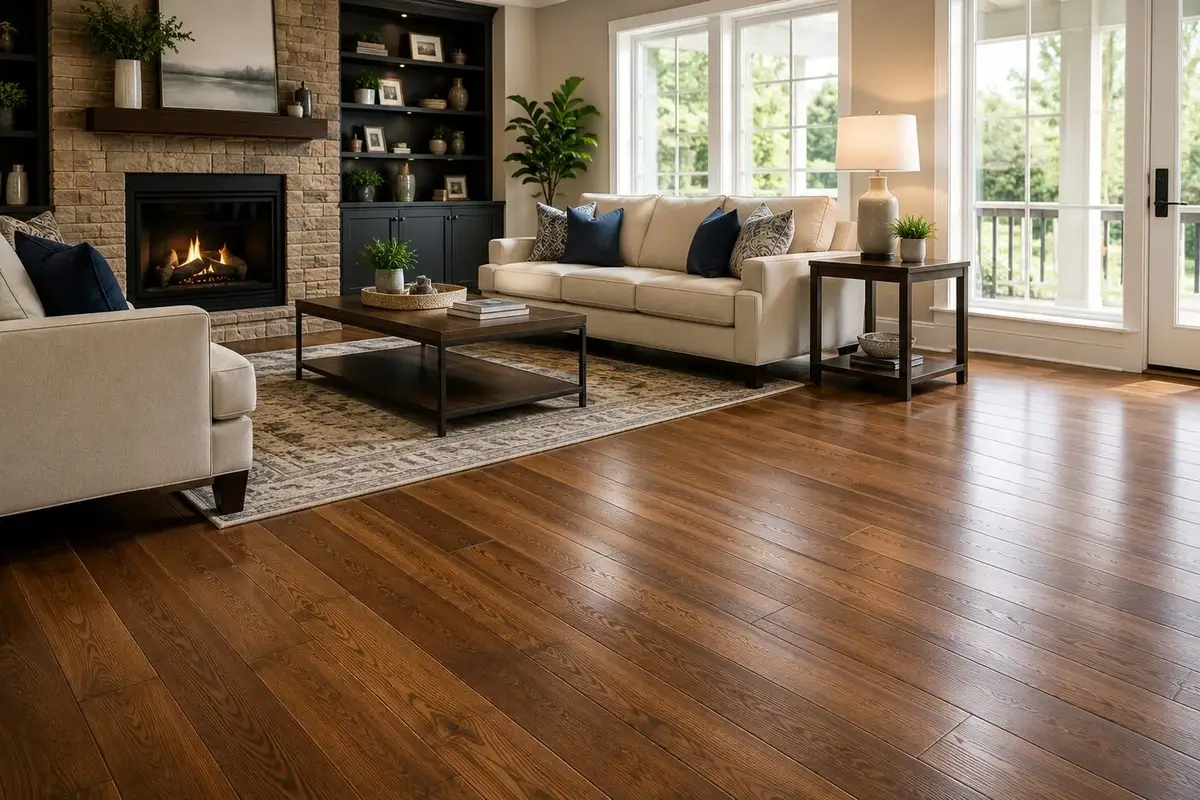
Yes, luxury vinyl plank flooring can often be installed directly over existing hardwood floors without removing the hardwood first. At Cavalieri Flooring, we generally consider existing hardwood suitable for an LVP overlay only when it is flat, dry, securely attached, structurally sound, and compatible with the flooring being installed. Before installation, the existing floor should be checked for movement, moisture damage, uneven areas, and other conditions that could affect the new LVP.
For an overlay to perform well, the existing wood should be flat, dry, firmly attached, clean, structurally sound, and compatible with the manufacturer's installation instructions. Covering damaged hardwood without correcting movement, moisture, high spots, or serious unevenness can lead to clicking, movement, joint separation, lifting, and premature locking-system failure.
Key takeaway
Do not decide based only on whether the new floor will hide the old one. Decide based on whether the old hardwood can still perform as a stable substrate.
Can you install LVP over hardwood floors?
In many homes, yes. Floating vinyl plank systems can be installed over approved hard surfaces, including existing wood flooring. At Cavalieri Flooring, our professional installation guidance starts with confirming that the existing hardwood is clean, dry, sufficiently flat, firmly attached, and structurally sound before it is covered.
Requirements vary by product. One collection may allow floating LVP over existing hardwood while another may require sanding, an approved panel, or a different preparation method for glue-down installation. Always follow the installation instructions and warranty requirements for the exact LVP product being installed—not a general rule about all vinyl plank.
When can LVP go over existing hardwood?
Installing vinyl plank over hardwood is usually possible when all of these conditions are true:
- The boards are firmly attached to the subfloor.
- There are no loose, severely squeaking, bouncing, or flexing boards.
- The floor is reasonably flat for the LVP manufacturer's tolerance.
- There is no active leak, rot, swelling, soft wood, or unexplained moisture damage.
- The hardwood is not severely cupped, crowned, warped, or buckled.
- The added floor height will not create major door, appliance, cabinet, or transition problems.
- The product instructions specifically allow installation over existing wood.
The hardwood does not need to look perfect if it will be concealed. It does need to behave like a stable base. A click-lock floor is still affected by movement underneath it.
When should you not install LVP over hardwood?
Covering the hardwood is not a repair for a moisture or structural problem. Do not simply install flooring over wood that is:
- Swollen, blackened, rotting, soft, or severely cupped
- Showing signs of an active plumbing leak or water intrusion
- Loose, bouncing, or moving between boards
- Severely uneven, with raised edges, deep depressions, or major transitions
- Installed as an unstable floating floor beneath another floating floor
Waterproof LVP may protect the surface of the new floor, but it does not dry wet wood or solve a leak. Moisture sources should be found and corrected first. Otherwise, the new floor can hide a developing problem until the repair is more expensive. If movement later appears in the finished floor, our guide explains why LVP can buckle, lift, or separate and what those symptoms may indicate.
Should you remove hardwood before installing LVP?
Not necessarily. Removing stable hardwood can add demolition, dust, disposal costs, labor, and project time. If the existing floor meets the manufacturer's requirements, keeping it can be a reasonable way to reduce the scope of the project.
There is also a preservation question. Genuine solid hardwood—especially a desirable oak or other species—may be worth sanding, repairing, refinishing, restaining, or restoring instead of covering. On the other hand, extensive cosmetic damage, maintenance priorities, pets, rental turnover, or a preference for modern water-resistant flooring may make LVP the better fit.
The decision should be intentional. If the hardwood is valuable or you may want to restore it later, discuss that goal with the installer before work begins.
Floating LVP vs. glue-down LVP over hardwood
Floating LVP over hardwood
Floating click-lock LVP is often the simpler option for an existing wood floor because the planks connect to one another instead of being permanently fastened to the hardwood. It can mean less demolition, faster installation, easier future removal, and less permanent alteration to the old floor.
That does not eliminate preparation. The hardwood still has to be secure, flat, dry, and clean, and the product may require a particular installation direction or surface tolerance.
Glue-down LVP over hardwood
Glue-down installation requires more scrutiny because the adhesive must bond to a properly prepared surface. Depending on the product and adhesive system, the existing hardwood may need to be sanded to raw wood, cleaned, primed, or covered with an approved underlayment panel.
Do not transfer floating-floor instructions to glue-down flooring. A product's requirements for existing wood can differ significantly by installation method.
Do you need underlayment or a moisture barrier?
Maybe—but do not automatically add another layer. First check whether the LVP already has an attached acoustic or comfort pad. Some products are designed to be installed without additional underlayment, and too much softness beneath a locking system can increase movement and stress the joints.
An underlayment also is not automatically the same thing as a moisture barrier. Waterproof LVP does not automatically protect the structure below it. Moisture-control requirements depend on the flooring construction, the existing substrate, the installation method, and the manufacturer's instructions.
For floors near concrete or wood systems with a history of moisture exposure, testing and product-specific moisture-control guidance matter more than a generic “add padding” recommendation. See our guide to why LVP underlayment is crucial for a deeper explanation. The installation instructions and warranty requirements for the exact LVP product being installed should always be followed.
How to prepare hardwood before installing LVP
1. Inspect the existing floor
Look for water damage, rot, termites or pests, missing boards, large gaps, cupping, crowning, buckling, soft areas, and boards that move independently. Repair structural or moisture problems before covering the floor.
2. Check flatness
Use a long straightedge or appropriate leveling tool to find high spots, low areas, raised boards, and depressions. Do not judge flatness by appearance alone. Rigid click-lock planks can reveal variations that are easy to miss from a standing position.
3. Secure loose boards
The base should not shift or flex underneath the new LVP. Properly secure loose hardwood where appropriate before installation.
4. Correct high and low areas
Preparation may include sanding high spots, repairing damaged boards, filling compatible low areas, or installing approved panels in specific situations. If significant high or low areas are found, professional floor leveling may be required. Use materials compatible with both the existing floor and the new flooring system.
5. Clean thoroughly
Remove dirt, dust, protruding nails or fasteners, construction debris, and anything that could create localized pressure beneath a floating floor.
6. Check finished-floor height
Adding LVP over hardwood increases the finished height. Check interior and exterior doors, dishwashers, refrigerators, cabinets, baseboards, sliding doors, vents, toilet flanges, and transitions to neighboring rooms. Clearance issues can determine whether removal is the better option.
Can LVP be installed over engineered hardwood?
Potentially, but identify how the engineered hardwood was installed. It may be nailed, stapled, glued, or floating. A floating LVP floor generally should not be placed over another unstable floating floor. The existing system needs to provide a firm, stable base without independent movement.
Can you install LVP over hardwood that has gaps?
Small cosmetic gaps are different from structural movement. Ask whether the boards are secure, whether the gaps create height differences, whether the floor is flat, and whether the gaps point to moisture or structural problems. Large depressions or unstable boards should be corrected before installation.
Should new LVP run perpendicular to the hardwood?
Installation direction should follow the requirements of the specific LVP product being installed. Depending on the flooring system, subfloor construction, and orientation of the existing hardwood, the new planks may need to run across the existing boards rather than parallel to them. The product-specific installation instructions should always control. When the layout or substrate is difficult to assess, a professional LVP installation evaluation can help identify the right preparation and installation approach.
LVP over hardwood in Florida: extra considerations
Florida homes deserve additional attention before one flooring system is covered by another. Plumbing leaks, slab moisture, exterior doors, HVAC condensation, flooding, repeated wet-mopping, and high indoor humidity can all affect wood flooring.
Pay special attention near sliding glass doors, large windows, patio doors, and sunrooms, where temperature and environmental conditions may change more dramatically. If the hardwood is expanding, contracting, cupping, or moving because of uncontrolled moisture, covering it does not correct the underlying cause.
Homes with suspected moisture issues should be evaluated before covering the hardwood; see our moisture testing service for the next step. Our guide to flooring for Florida homes explains how humidity and moisture affect flooring choices. For a broader installation overview, see our professional LVP installation guide.
Advantages and disadvantages of installing LVP over hardwood
| Potential advantages | Potential tradeoffs |
|---|---|
| Less demolition, dust, and disposal | Increased finished floor height |
| Faster project completion in suitable conditions | Door, appliance, cabinet, and transition clearance |
| Potentially lower labor scope | Existing problems can be hidden underneath |
| Hardwood may remain available for future restoration | Valuable hardwood becomes inaccessible |
| Easy-care, water-resistant surface options | Future removal may require additional work |
Should you refinish the hardwood instead?
Consider refinishing when the hardwood is structurally sound, most of the damage is cosmetic, the floor can still be sanded, and preserving original materials matters to you. Our guide to hardwood refinishing cost and potential return can help frame that comparison. Consider LVP when easier maintenance, water resistance, rental turnover, pets, extensive cosmetic damage, or the cost of restoration makes modern vinyl the more practical choice.
There is no single answer for every house. The condition of the existing floor and the goals for the room should drive the decision.
Bottom line: can you put LVP over hardwood?
Yes. In many homes, luxury vinyl plank can be installed directly over existing hardwood flooring. Before installation, confirm that the hardwood is flat, dry, secure, structurally sound, and compatible with the manufacturer's requirements.
If the wood has serious moisture damage, movement, rot, severe unevenness, or structural problems, correct those conditions first. Removing the hardwood may ultimately be safer than covering it.
For homeowners in Orlando and Central Florida, a professional flooring installation evaluation can help identify moisture, subfloor, transition, and flatness issues before thousands of square feet of new flooring are installed.
Frequently asked questions
Can you put luxury vinyl plank directly over hardwood?
Yes, in many installations. The hardwood must be stable, sufficiently flat, dry, clean, and structurally sound, and the LVP manufacturer must permit installation over existing wood flooring.
Do I need plywood over hardwood before installing LVP?
Not automatically. If the existing hardwood meets the LVP manufacturer's substrate requirements, additional plywood may not be necessary. Damaged or significantly uneven floors may require additional preparation.
Do I need underlayment between LVP and hardwood?
It depends on the LVP. Many products already have attached padding, and some manufacturers prohibit additional underlayment. Follow the instructions for the exact flooring product.
Can waterproof vinyl flooring trap moisture under hardwood?
Waterproof LVP does not eliminate existing moisture problems. Any active leak, excessive moisture, wet wood, or structural moisture issue should be corrected before covering hardwood.
Can I install floating LVP over engineered hardwood?
Possibly, but the engineered hardwood must provide a stable substrate. Installing a floating floor over another moving or unstable floating floor may cause problems, so determine how the existing engineered hardwood was installed first.
Should I remove hardwood before installing vinyl plank flooring?
Not always. Stable hardwood can sometimes remain underneath LVP. Removal is more appropriate when the hardwood is structurally damaged, significantly uneven, moisture-damaged, unstable, or incompatible with the new flooring manufacturer's requirements.
Will LVP ruin the hardwood underneath?
A floating installation does not necessarily destroy the hardwood, but its future condition cannot be guaranteed. Moisture, existing finish condition, underlayment, environmental conditions, and installation method can all affect it.
Is LVP over hardwood a good idea in Florida?
It can be, but moisture and humidity deserve special attention. Existing hardwood should be inspected for moisture damage, cupping, movement, and other problems before being covered.
Not sure whether your hardwood can be covered?
Cavalieri Flooring can evaluate the existing floor and help determine whether an LVP overlay, additional preparation, or removal makes the most sense for your Orlando-area project.
Or call us now: (321) 424-0546
Related Articles & Resources
Make the right flooring decision before installation begins
Whether you keep the hardwood, prepare it for an LVP overlay, or remove it first, the right decision starts with an honest look at the existing floor.
Schedule Free Estimate