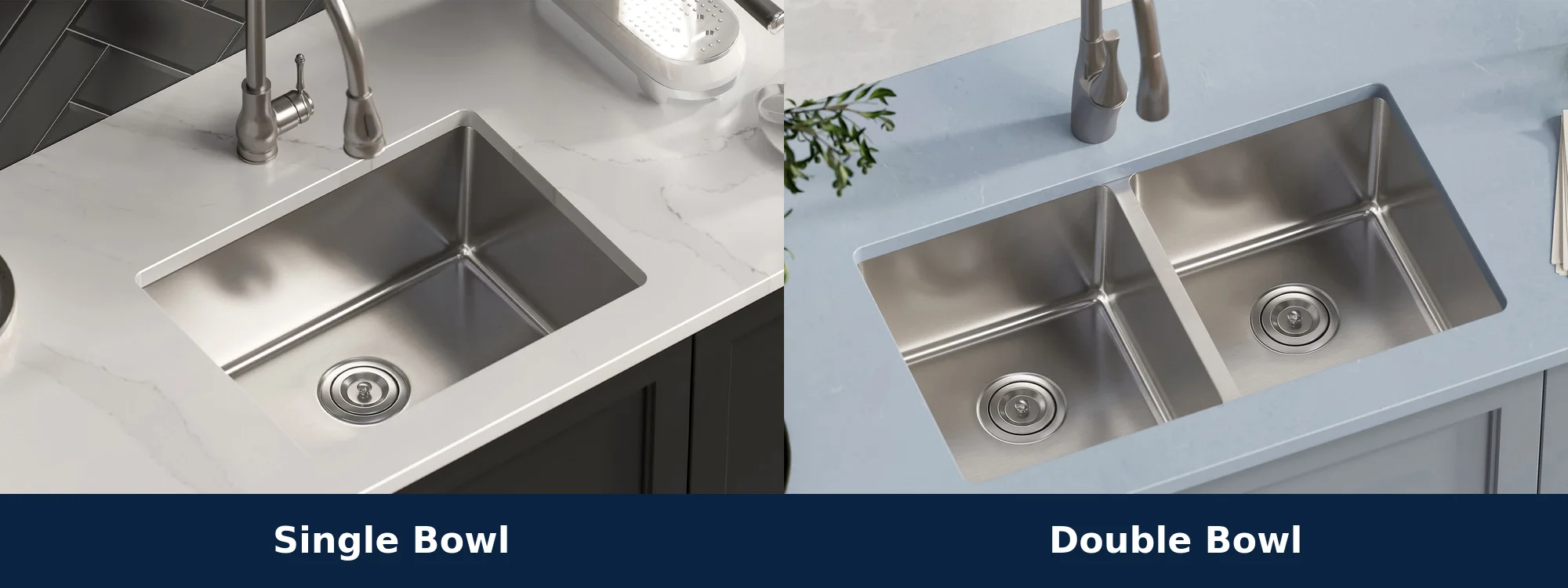
Choosing between a single bowl and double bowl kitchen sink may have a bigger effect on your everyday kitchen routine than choosing the sink's finish.
A large single bowl gives you one uninterrupted basin for baking sheets, stockpots, skillets, and oversized cookware. A double bowl divides the sink into two work areas, making it easier to wash on one side while rinsing, soaking, draining, or preparing food on the other.
Quick Answer: Single Bowl or Double Bowl?
Choose a single bowl if your priority is space. It is usually the better fit for large cookware, dishwasher-heavy homes, frequent cooking, and simple cleanup.
Choose a double bowl if your priority is separation. Two basins help with hand-washing, soaking, rinsing, food preparation, and multiple people working at the sink.
There is no universally best kitchen sink configuration. Your cookware, dishwasher use, hand-washing habits, cabinet size, countertop space, garbage disposal, and preferred layout all matter.
When comparing stainless steel kitchen sinks, evaluate bowl configuration alongside stainless steel grade, gauge, sound-deadening, finish, dimensions, and installation requirements. The number of basins tells you how the sink works, not how well it is constructed.
| Kitchen need | Single bowl | Double bowl |
|---|---|---|
| Large pots and pans | Excellent | Can be restrictive |
| Baking sheets | Excellent | More difficult |
| Hand-washing dishes | Good | Excellent |
| Washing and rinsing separately | Needs an accessory or dishpan | Excellent |
| Dishwasher-heavy household | Excellent | Good |
| Two people working together | Good | Excellent |
| Simple cleaning | Excellent | More divider and edges |
| Maximum uninterrupted basin | Winner | No |
| Separating kitchen tasks | Good | Winner |
What Is a Single-Bowl Kitchen Sink?
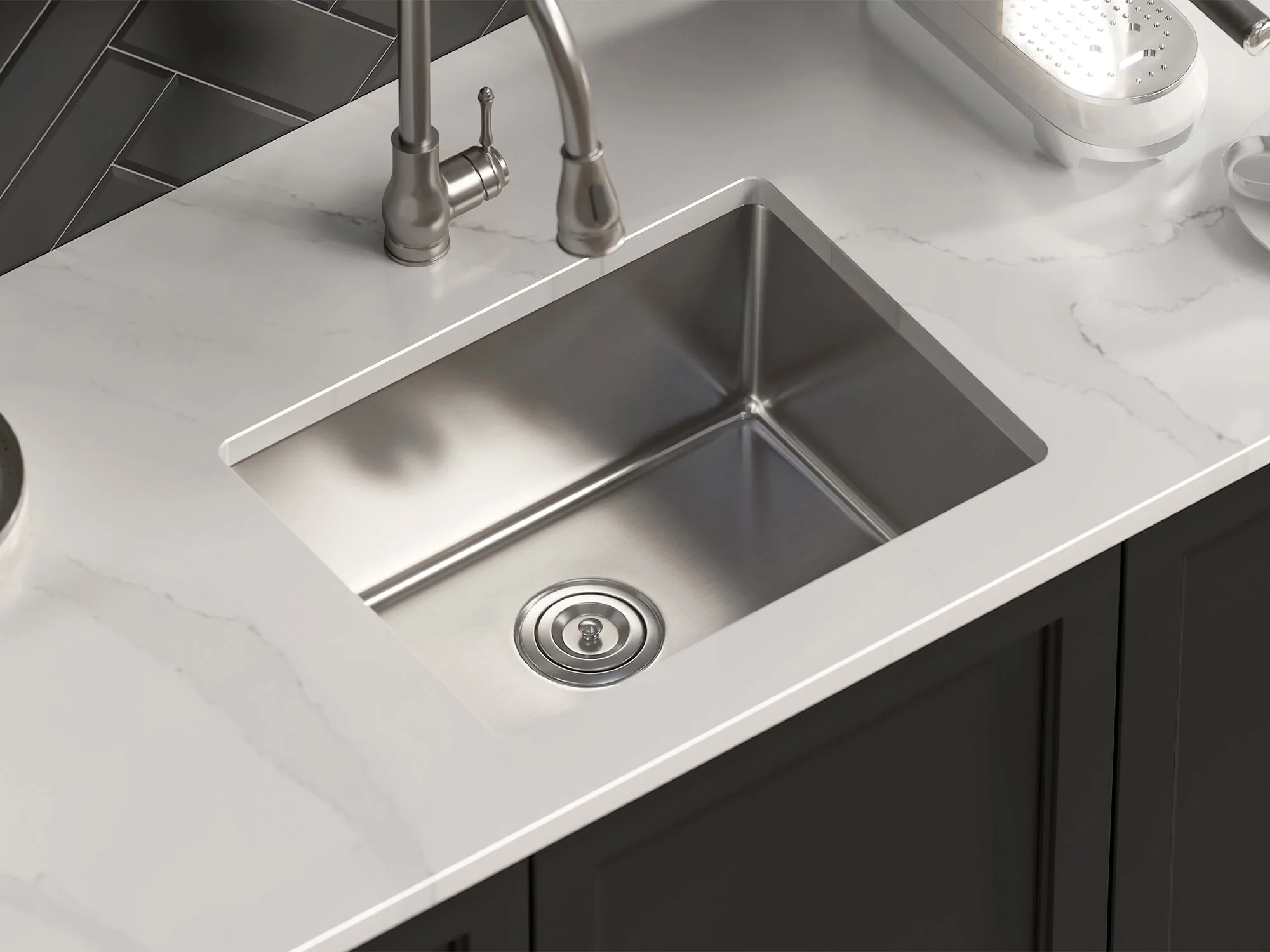
A single-bowl kitchen sink, also called a single-basin sink, has one continuous interior bowl with no center divider. That uninterrupted space is its biggest advantage.
A large single bowl can accommodate items that can be awkward in divided sinks, including sheet pans, roasting pans, stockpots, Dutch ovens, large skillets, cutting boards, grill grates, and oversized serving platters. Single-bowl sinks are especially common in modern stainless steel kitchens and workstation designs.
Advantages of a Single-Bowl Kitchen Sink
More room for large cookware
This is the strongest reason to choose a single basin. A full-size baking sheet may not fit flat into one half of a 50/50 sink, while a large single bowl lets you position bulky cookware more naturally.
Easier sink cleaning
A single bowl normally has one basin, no center divider, fewer edges, and fewer inside transitions. That can make routine cleaning simpler and reduce places where food residue or mineral deposits accumulate.
Excellent for dishwasher households
If most plates, glasses, flatware, and everyday dishes go directly into a dishwasher, the sink primarily handles produce, knives, pots, pans, cutting boards, and other items the dishwasher cannot. One large basin may be more useful than two smaller ones.
Works well with a workstation sink
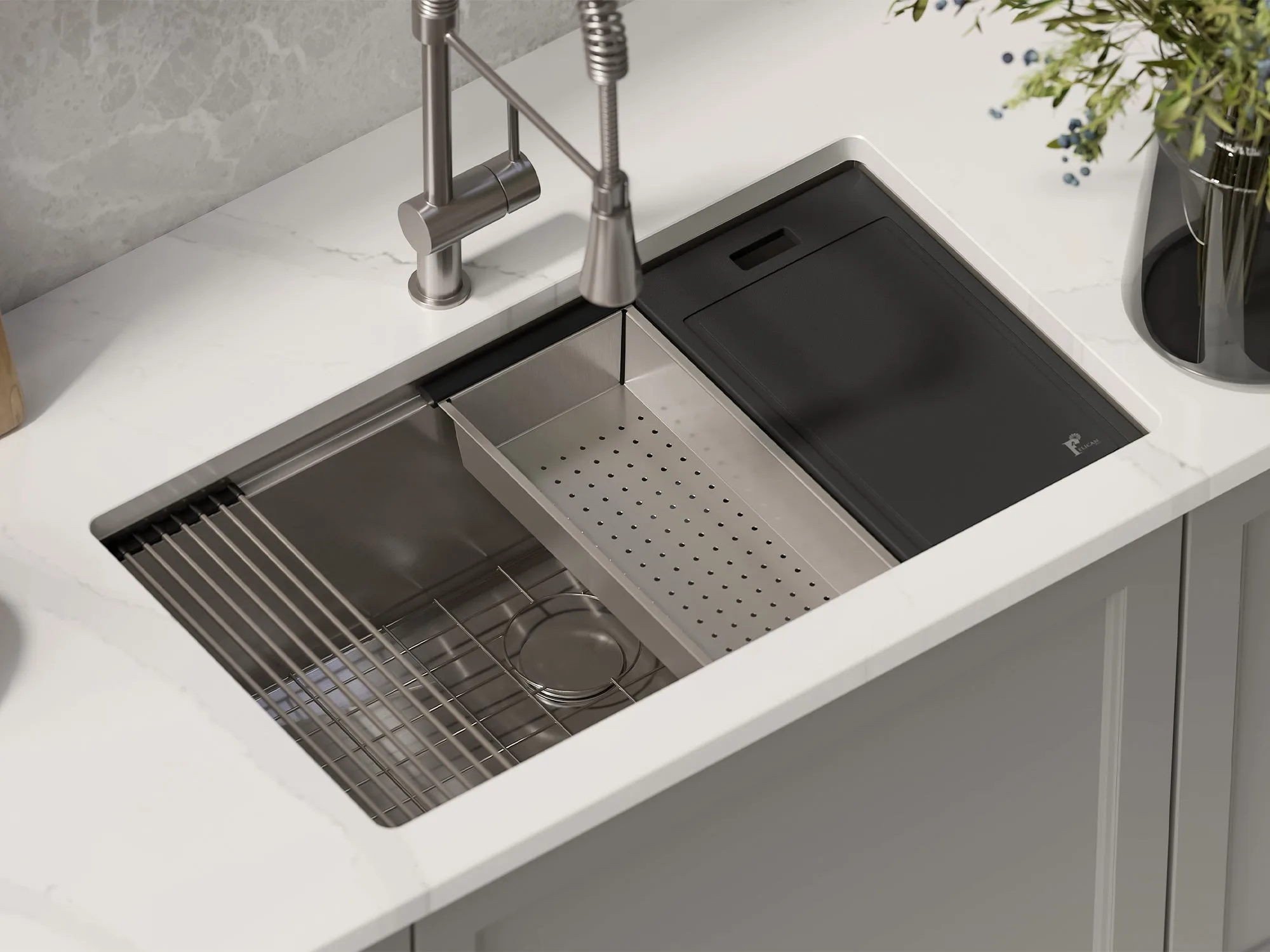
A workstation sink adds an integrated ledge for cutting boards, colanders, roll-up drying racks, prep bowls, and bottom grids. This creates temporary work zones without permanently dividing the basin, giving you some organizational benefits of a double bowl while retaining open space.
Can work well in a smaller kitchen
A compact single bowl can provide useful washing capacity without requiring a second compartment. For an apartment, condo, or compact kitchen, a 23- or 27-inch single bowl may be more useful than two undersized basins.
Disadvantages of a Single-Bowl Sink
A single bowl cannot permanently separate tasks. If dirty dishes are soaking in the basin, they occupy the same area you may need for rinsing vegetables, draining pasta, washing your hands, or filling a pot.
You can work around this with a removable dishpan, colander, workstation accessory, or drying rack, but there is no permanent second basin. Dirty dishes can also take over the entire sink, and a traditional wash-then-rinse workflow requires more planning.
What Is a Double-Bowl Kitchen Sink?
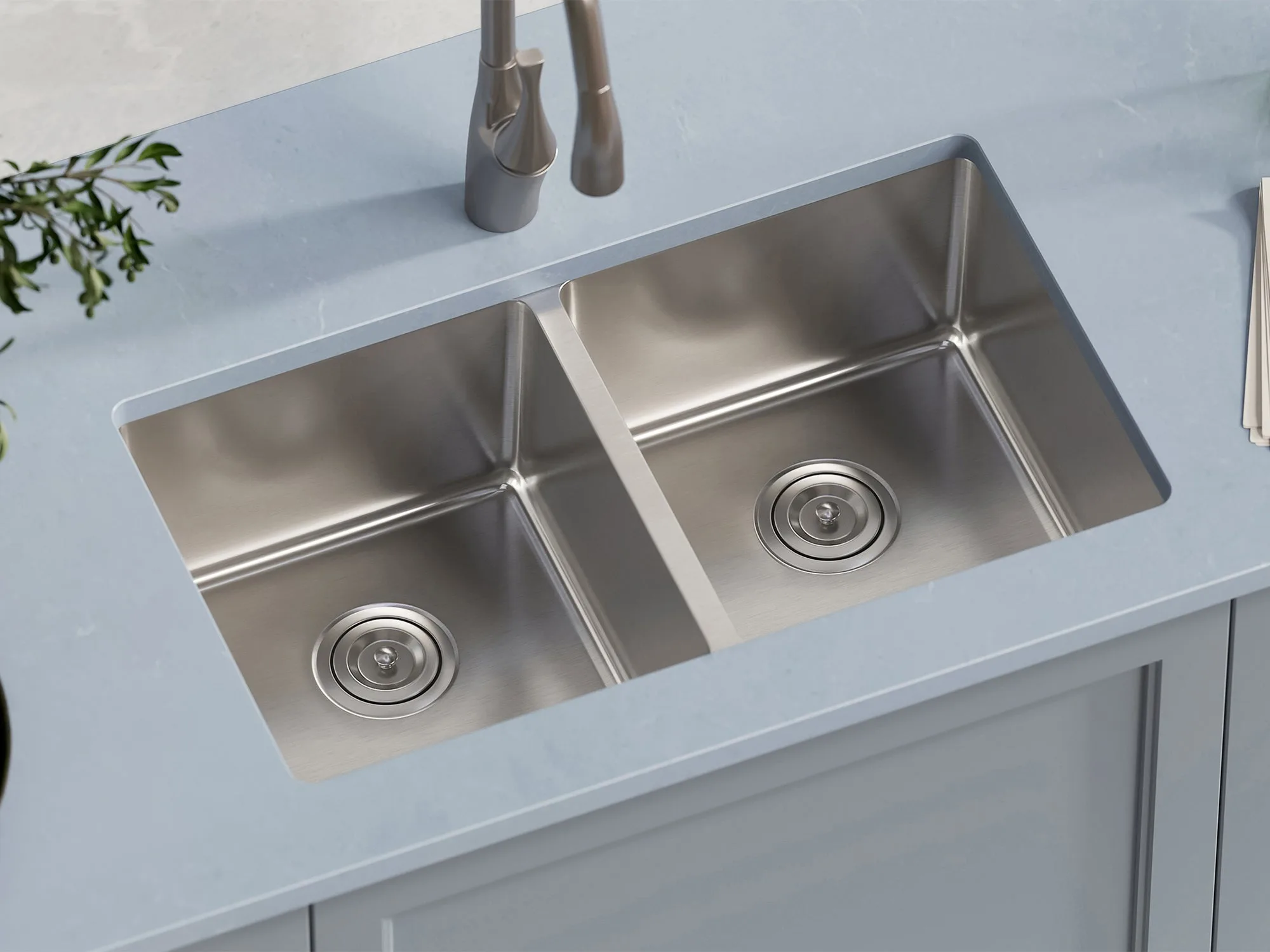
A double-bowl kitchen sink, also called a double-basin sink, divides the sink into two separate basins. The bowls may be equal or unequal in size, equal or different in depth, and separated by a full-height or low divider.
The main advantage is straightforward: two bowls allow two different sink tasks to happen at the same time. You can soak dishes on one side while rinsing vegetables on the other, or wash dishes on one side while rinsing them on the other.
Advantages of a Double-Bowl Kitchen Sink
Better multitasking
Two work areas make it easier to soak, wash, rinse, drain, and prepare food simultaneously. That physical separation is the main reason double sinks remain popular.
Separate clean and dirty items
A divider helps keep dirty cookware, clean dishes, produce, and food-preparation items from occupying the same basin. For households that hand-wash many dishes, this can improve workflow.
Two people can use the sink more easily
One person can rinse vegetables while another washes a pan. This can be helpful for couples who cook together, large families, entertaining, and busy kitchens.
One side can remain available
You can leave dishes soaking in one bowl and still have a usable second basin. That is difficult to duplicate once a completely full single bowl has become the only work surface.
Disadvantages of a Double-Bowl Kitchen Sink
The divider consumes interior space and separates the total sink width. A double sink can have the same exterior width as a single sink while providing substantially less uninterrupted room inside each individual basin.
This can make baking sheets, large skillets, roasting pans, and oversized cutting boards difficult to position. A double bowl also adds a divider, additional corners, and additional edges to clean.
Single Bowl vs. Double Bowl for Cookware and Dishwashers
For large pots and pans, single bowl wins
If oversized cookware is a major concern, uninterrupted basin width is extremely valuable. Stockpots, woks, cast-iron skillets, roasting pans, baking sheets, and large Dutch ovens are easier to position and wash in a large single bowl.
For dishwasher-heavy homes, single bowl often wins
If a dishwasher handles most smaller dishes, the sink's primary job becomes handling the largest items in the kitchen. That makes uninterrupted bowl space particularly useful. If you still hand-wash frequently despite owning a dishwasher, a double basin may remain the better choice.
Without a dishwasher, double bowl deserves serious consideration
Without a dishwasher, you may routinely need separate areas for washing, rinsing, soaking, and drying preparation. A traditional double bowl handles this naturally. A single bowl can still work with a removable dish tub or workstation accessories.
50/50 vs. 60/40 Double-Bowl Sinks
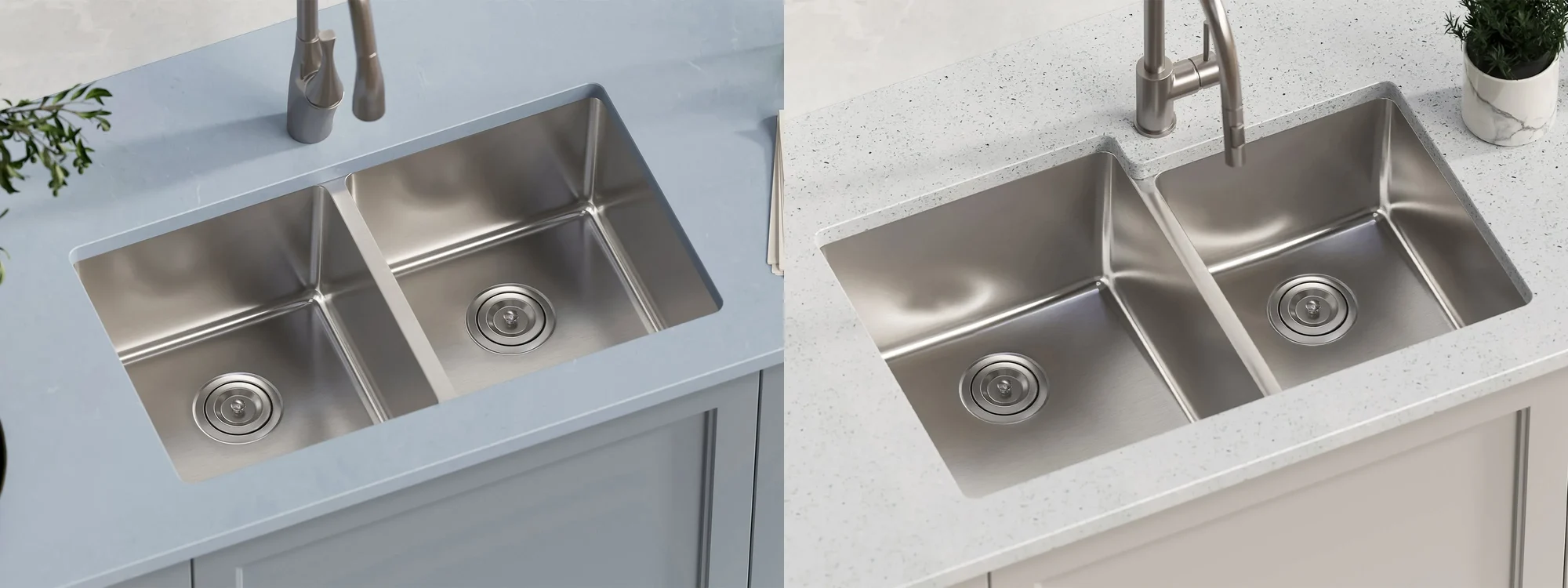
50/50 double bowl
A 50/50 sink divides the usable area approximately evenly. It provides equal work areas, an easy wash-and-rinse workflow, symmetry, and flexibility for two users.
The tradeoff is that neither basin is particularly large. If your total sink is around 30–33 inches wide, dividing it nearly in half can make large cookware difficult to handle.
60/40 double bowl
A 60/40 sink gives one basin a larger share of the overall sink. The larger side provides more room for cookware, washing, and soaking, while the smaller side remains useful for rinsing, food preparation, draining, or disposal placement.
If you want a double sink but regularly use large cookware, 60/40 is often the best compromise. You retain two work zones without making both basins equally small.
| Feature | 50/50 | 60/40 |
|---|---|---|
| Equal washing and rinsing | Excellent | Very good |
| Large cookware | Fair | Better |
| Visual symmetry | Excellent | Asymmetrical |
| Multitasking | Excellent | Excellent |
| Main washing bowl | Same size | Larger |
| Small prep or rinse bowl | No | Yes |
| Best compromise | Good | Excellent |
What Is a Low-Divide Double Sink?
A low-divide kitchen sink has two bowls, but the divider stops below the top edge of the sink. It attempts to combine task separation with more flexibility for larger cookware.
You can use it like a normal double sink for smaller tasks, while tall or oversized cookware can extend across the lower divider more easily than with a conventional full-height divider. A low-divide sink may be ideal if you want two basins, cook with larger pans, hand-wash dishes, and want more flexibility than a traditional double sink.
Single vs. Double Bowl for Workstation and Farmhouse Sinks
Workstation sinks
A single-bowl workstation sink can create temporary zones above one continuous basin: a cutting board on one side, an open sink in the middle, and a drying rack on the other. Choose a workstation single bowl for maximum bowl space, frequent cooking, valuable counter space, integrated prep accessories, and large cookware.
Choose a double workstation when permanent separation matters, multiple people prep together, you hand-wash frequently, or you want accessories plus separate basins.
Farmhouse sinks
Both single- and double-bowl farmhouse sink designs are available. A single-bowl farmhouse sink favors maximum interior space, large cookware capacity, and an oversized basin appearance. A double-bowl farmhouse sink favors separate work zones and traditional washing-and-rinsing functionality.
Apron-front styling does not force you into one layout. Choose the farmhouse configuration based on the way you cook and wash dishes, then verify cabinet dimensions, sink support, bowl depth, and countertop requirements.
Single vs. Double Bowl for an Undermount Sink
Both configurations work well as undermount kitchen sinks. The bowl decision should therefore be based primarily on workflow rather than mounting style.
An undermount installation attaches the sink beneath the countertop, producing a clean countertop-to-sink transition. The real question is whether you want one large uninterrupted undermount basin or two separated undermount basins.
If you are purchasing a stainless steel sink, browse Cavalieri Flooring's stainless steel kitchen sinks to compare available bowl configurations and sizes.
Does a Garbage Disposal Work Better With a Single or Double Sink?
A garbage disposal can work with either configuration when the sink and disposal are compatible. In a single bowl, the disposal generally occupies the only drain, which simplifies plumbing. In a double bowl, the disposal is usually installed beneath one bowl while the other has a standard drain.
A double-bowl sink typically requires more plumbing connections underneath. Verify the sink, disposal, dishwasher connection, drain piping, cabinet, and filtration-system clearances before ordering.
What Sink Size and Depth Should You Choose?
Bowl configuration is only useful if the sink fits your cabinet. Check exterior width, front-to-back depth, bowl depth, minimum cabinet size, countertop cutout, faucet clearance, disposal clearance, plumbing, and under-sink storage.
As general planning ranges, smaller kitchens often suit a 23–27-inch single bowl, typical kitchens often use a 27–33-inch sink, and large kitchens may accommodate a 30–36-inch sink or workstation. These are planning ranges, not installation rules; always use the exact product specification sheet.
Depth matters too. A deeper sink can hide dishes, hold larger cookware, reduce splashing, and increase usable volume, but excessive depth can make you bend and reach farther. Around 8–10 inches is common for many full-size kitchen sinks, although the right depth depends on the user and model.
Which Sink Is Easier to Clean?
Single bowl generally wins for simplicity. There are fewer surfaces, no center divider, and fewer inside corners. That does not make double sinks difficult to clean; corner radius, surface finish, drainage slope, sink material, bottom grids, and water quality matter too.
Do not choose a configuration solely on a claim about water use. Your habits, whether you fill the basin, dishwasher efficiency, dishwashing method, and whether you use a dish tub matter more than the number of bowls.
Do Not Forget Stainless Steel Grade and Gauge
Bowl configuration tells you how a sink functions. It does not tell you how it is constructed.
Stainless steel grade
304 stainless steel is a common quality material for residential kitchen sinks. Read our 304 stainless steel sink guide for a deeper explanation of alloy grade, corrosion resistance, 201 vs. 304, and 304 vs. 316.
Gauge
16- and 18-gauge stainless steel are both common quality options. Read our 16-gauge vs. 18-gauge stainless steel sink guide for a full comparison of thickness, rigidity, sound, dent resistance, and value.
Sound-deadening and finish
Look for sound pads, undercoating, and vibration control. A brushed or satin finish can help ordinary scratches and water marks blend into the surface better than a highly polished finish. Gauge and bowl configuration should be evaluated with these construction details, not instead of them.
Single Bowl vs. Double Bowl Decision Guide
Choose a single-bowl sink if most of these describe you:
- You use a dishwasher regularly.
- You cook with large pans or wash baking sheets.
- You want one large open basin.
- You prefer simple cleanup.
- Your kitchen is compact.
- You want a workstation sink.
- You do not frequently need separate washing and rinsing zones.
Choose a double-bowl sink if most of these describe you:
- You hand-wash dishes frequently.
- You like separate washing and rinsing.
- You soak dishes while using the other side.
- More than one person uses the sink.
- You want to separate food preparation from cleanup.
- You rarely wash oversized cookware.
- You prefer dedicated work zones.
Choose a 60/40 or low-divide sink if you are thinking, “I want both.” These designs provide task separation while preserving more large-item flexibility than a traditional equal double bowl.
Frequently Asked Questions
Is a single bowl or double bowl kitchen sink better?
Neither is universally better. A single bowl is generally better for large cookware and uninterrupted workspace. A double bowl is better for separating washing, rinsing, soaking, and food-preparation tasks.
Are single-bowl sinks more popular now?
Large single bowls and workstation sinks are prominent in current manufacturer collections, but double-bowl sinks remain widely available. Match the sink to your cooking and cleaning habits rather than choosing based on trends.
Is a single bowl better if you have a dishwasher?
Often, yes. If the dishwasher handles most smaller dishes, a large single basin gives you more room for oversized cookware that still requires hand washing.
Is a double sink better without a dishwasher?
It can be. Two bowls make it easier to create separate washing and rinsing zones when dishes are cleaned primarily by hand.
Which is better: 50/50 or 60/40?
Choose 50/50 for two equal work areas. Choose 60/40 for a larger primary basin plus a smaller secondary basin for rinsing or food preparation.
What is the advantage of a low-divide sink?
A low divider provides two distinct basins for everyday tasks while allowing larger cookware to extend across the divider more easily than with a traditional full-height divider.
Can you put a garbage disposal in a double sink?
Yes, when the sink and disposal are compatible. The disposal is typically installed under one of the two drains.
Is a workstation sink better than a double sink?
A workstation is often better for buyers who want one large basin plus removable prep and drying zones. A double bowl is better for buyers who want permanent separation between tasks.
Sources & References
- Consumer Reports — Selecting your sink and faucet for sink performance, sound treatment, and finish considerations.
- Specialty Steel Industry of North America — Technical Resources for stainless steel grade, gauge, and construction context.
Shop Single- and Double-Bowl Stainless Steel Kitchen Sinks
Cavalieri Flooring carries stainless steel kitchen sinks in single- and double-bowl configurations, including multiple sizes and Pelican Urban and Handmade Series models.
When comparing models, consider bowl layout + dimensions + cabinet size + 304 stainless steel + gauge + sound-deadening + finish + accessories.